Gels for Men: What Actually Works for Erectile Dysfunction
- Sorts the whole category into four legal classes, only two of which are treatments
- Gives the regulator's own test for spotting a product being sold unlawfully
- Explains why cream or gel tells you nothing useful about a product
- Covers what the UK evidence shows for the topical route, with the figures attributed properly
Search for a gel for men and you will be shown four completely different kinds of product using almost the same words. Two of them are treatments. One of them is not pretending to be. One of them is being sold to you unlawfully.
Nothing on the front of the packaging reliably tells them apart. The texture does not. The word on the tube does not. The claims certainly do not, because the loudest claims tend to come from the category with the least behind it.
What does tell them apart is the legal class the product sits in, and there are only three legitimate boxes. Anything that fits none of them is the fourth category, and that is the one to walk away from.
This page sorts the category properly, gives you a two minute test you can run yourself, and sets out what the UK evidence actually shows for topical treatment of erection difficulty.
Key things to know
- Four different product classes are sold under the same search terms
- Only medical devices and licensed medicines are treatments in any regulated sense
- A product claiming to treat a condition is legally a medicine, whatever it calls itself
- Cream or gel describes the texture and tells you nothing about the category
- Licensed topical medicine for this purpose is prescription only in the UK
- Anything promising results with no prescription and no device marking is a warning sign
The four things sold as gels for men
In the UK, the market for penis gel products includes four distinct categories, each with different implications for safety, effectiveness, and legal status. These categories are medical devices, licensed medicines applied topically, cosmetics or lubricants, and unlicensed products claiming to treat erectile dysfunction. Understanding these distinctions is crucial when treating erectile dysfunction and choosing the right option for better erections and improved sexual performance.
Medical devices work through physical stimulation by applying a topical gel to the glans penis, stimulating nerve endings and increasing blood flow to the penis without systemic absorption. Licensed medicines, such as erectile dysfunction creams containing alprostadil, act pharmacologically by dilating blood vessels in the penile tissue to enhance blood flow and support a natural erection. These require a prescription and professional medical advice due to their potent action and possible side effects.
One: medical devices
A medical device achieves its effect by physical means rather than by a drug action. UK guidance defines a device as something that does not achieve "its principal intended action in or on the human body by pharmacological, immunological or metabolic means", and adds that for devices the principal action "is typically fulfilled by physical means".
Topical products in this class work through a physical effect at the application site rather than through a substance absorbed into the body. They carry a conformity marking, either CE, UKCA or CE UKNI, and they must be registered with the regulator before being placed on the Great Britain market.
They are available without a prescription. That follows from the legal category, not from any judgement about strength.
Two: licensed medicines applied to the skin
These contain an active substance that produces a pharmacological effect, and they hold a marketing authorisation for that use.
Alprostadil cream is the established example in the UK. UK evidence summaries describe it as chemically identical to prostaglandin E1 and note that it "causes vasodilation of blood vessels in the erectile tissue of the corpora cavernosa and an increase in intracavernosal artery blood flow, resulting in an erection".
Because it acts pharmacologically, it is a medicine, and in the UK it is prescription only. It is dispensed after a clinical assessment, not bought off a shelf.
Three: cosmetics and lubricants
These make no medical claim and are not treatments. Sold honestly, as a lubricant or a cosmetic product, there is nothing wrong with them.
The problem arises when a product in this class is marketed as though it belonged in one of the first two. A lubricant is a lubricant, and describing it accurately is entirely legitimate. If it is presented as treating a condition, it has crossed a legal line, which brings us to the fourth category.
Four: products claiming treatment with no licence
This is the category the search results are full of, and it is the one worth understanding properly.
UK guidance sets out two limbs of the definition of a medicinal product. The first covers "any substance or combination of substances presented as having properties for treating or preventing disease in human beings". The second covers substances that restore, correct or modify physiological functions "by exerting a pharmacological, immunological or metabolic action".
If you want the regulated options laid out together rather than sorted by marketing, the range of licensed ED treatments is the place to start.
The four categories side by side
| Category | How it works | Prescription | What it carries |
|---|---|---|---|
| Medical device | Physical action at the application site | Not required | CE, UKCA or CE UKNI marking, registered |
| Licensed topical medicine | Pharmacological action | Required | Marketing authorisation |
| Cosmetic or lubricant | No treatment effect claimed | Not applicable | No medical claim at all |
| Unlicensed product with claims | Unknown and untested | None held | Nothing that entitles it to be sold |

How to tell which one you are holding
Knowing how to identify the type of penis gel you have is essential for safety and effectiveness. First, check if the product is an erectile dysfunction (ED) cream or a medical device. ED creams work pharmacologically by increasing blood flow through active ingredients like alprostadil, which helps to treat ED by relaxing blood vessels and allowing more blood to enter the penile tissue. Unlike oral medications, these creams are applied directly to the penis and have a rapid onset, typically within 5 to 30 minutes, providing a potential option for men looking to treat ED without systemic effects.
Next, look for regulatory markings such as CE, UKCA, or CE UKNI on the packaging. These marks indicate the product is a registered medical device or a licensed medicine. Products without these markings that claim to treat ED are likely unlicensed and may contain harmful ingredients such as potassium hydroxide or propylene glycol, which can cause irritation or allergic reactions. Excess cream or incorrect application may lead to mild burning or a cooling sensation, which are common side effects reported in clinical studies.
The regulator's test, in plain terms
Ask one question: does this product claim to treat a medical condition?
If the answer is yes, it must be either a licensed medicine or a marked medical device. There is no third legitimate option for a product making that claim. That is not an opinion, it is the consequence of the definition quoted above.
Three checks, about two minutes
Run these before buying anything in this category.
- Look for a conformity mark. CE, UKCA or CE UKNI on the packaging means it is presented as a device. No mark and no prescription, but a treatment claim on the label, means something is wrong.
- Check the seller. Only pharmacies on the General Pharmaceutical Council register are legally operating in Great Britain. The registration number is usually in the site footer or the about page, and the register is searchable by name or number. If the pharmacy does not appear, do not buy from it.
- Read the claims against the category. Promises of certain results, dramatic wording and no mention of any regulator are the pattern of the fourth category. Legitimate products describe what they do and what they do not.
Official patient guidance on devices adds two checks for when it arrives: confirm the regulatory markings are present, and confirm the manufacturer's address appears on the packaging.
Cream or gel, does it matter?
Not in the way people expect. The word describes the texture, not the category or the strength.
The licensed prescription only topical medicine in this area is a cream. A widely sold non prescription product in the same area is a gel. The difference between them is not the consistency, it is that one acts pharmacologically and holds a marketing authorisation while the other acts physically and carries a device marking.
So "cream or gel" is the wrong question. The useful questions are what does it do, how does it achieve that, and what does it carry on the box.
Formulation does matter for practical things: how it spreads, how it feels, how quickly it dries or evaporates, and how readily it transfers to someone else. Those affect the experience. They do not tell you whether the product is a treatment.
How topical ED treatments actually work
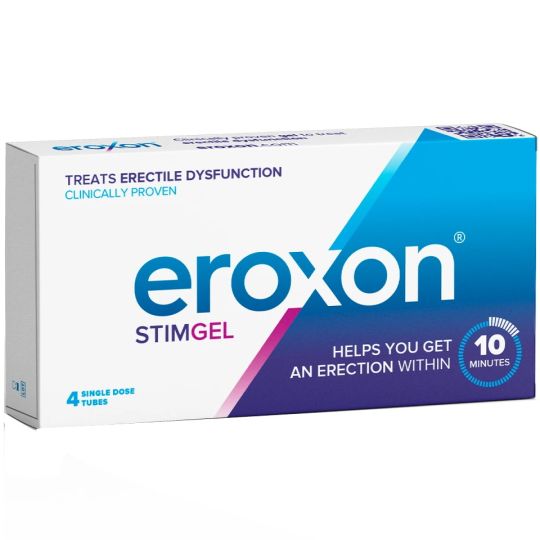
Topical treatments for erectile dysfunction work through different mechanisms depending on their classification. Medical devices, such as Eroxon gel, apply a physical stimulus to the head of the penis, where nerve endings are concentrated. This physical stimulation triggers signals that help initiate an erection by increasing blood flow locally without systemic absorption or interaction with other medications. The gel creates a gradual warming effect after an initial cooling sensation, which enhances the tactile experience and may improve interaction with sexual partners.
In contrast, licensed topical medicines like Vitaros cream contain alprostadil, a vasodilator that works pharmacologically by dilating blood vessels in the erectile tissue. This increases nitric oxide levels, promoting blood flow into the penis to support a natural erection. The cream is applied using a special applicator directly into the urethra, and its effect typically begins within 5 to 30 minutes, lasting for 1 to 2 hours. Applying Vitaros cream requires careful attention to instructions, including applying the cream properly and understanding the recommended frequency to avoid side effects such as penile pain or burning sensations.
Devices work at the surface
A device based topical product applies a physical stimulus where the nerve endings are dense, at the head of the penis. The intended effect is to contribute to the signalling that starts an erection, rather than to alter anything in the bloodstream.
Nothing is absorbed to act on an enzyme, so there is no drug level rising and falling, and no systemic interaction of the kind tablets carry.
Medicines work pharmacologically
A licensed topical medicine does something different. Alprostadil cream is applied to the tip of the penis and produces its effect by dilating blood vessels in the erectile tissue and increasing blood flow into it.
That is a drug action. It is why the product is a medicine, why it needs a prescription, and why a prescriber checks your history before it is supplied.
Why that difference changes what you can expect
A physical stimulus contributes to starting the process. A vasodilator acts further along it, on the blood vessels themselves.
If your difficulty is mainly about getting the sequence reliably started, a stimulus has something to work with. If the limitation is blood flow into the tissue, the pharmacological route is the one addressing the actual problem.
Treatment suitability depends on an individual clinical assessment, and where other concerns sit alongside it, such as premature ejaculation care, an online consultation with UK registered prescribers can cover both together.
Do erection gels work?
Erection gels, including products like Eroxon gel and Vitaros cream, can offer effective options for men experiencing mild to moderate erectile dysfunction (ED). Eroxon gel works by increasing blood flow through local stimulation, creating a cooling sensation followed by warming that helps initiate an erection within approximately 10 minutes of application. Clinical studies show that Eroxon is effective for about 60% of men, providing a non-prescription alternative available over the counter in UK pharmacies. Vitaros cream, containing the active ingredient alprostadil, is a licensed topical medicine that works pharmacologically by dilating blood vessels in the erectile tissue. It requires a prescription in the UK and typically works within 5 to 30 minutes, with effects lasting 1 to 2 hours.
What the UK evidence shows for the licensed topical medicine
This is where real numbers exist, and they belong to alprostadil cream and to nothing else.
UK evidence summaries describe two randomised controlled trials enrolling 1,732 men across 82 centres, with a twelve week treatment period, using the International Index of Erectile Function as the outcome measure. That is a properly sized evidence base with a defined population, a defined duration and a defined measure.
Note what those three things give you. Any effectiveness claim that cannot state its population, its duration and its measure is not giving you information you can use.
What can and cannot be said about devices
Devices reach the market by conformity assessment rather than by marketing authorisation, so there is no regulator published efficacy verdict on an individual device to look up. Manufacturers are required to "actively update their clinical evaluation with data obtained from post market surveillance", which means the evidence for a device is a continuing file rather than a fixed published judgement.
That is a feature of the route rather than a gap, but it does mean you should treat any single headline percentage about a device with the same scepticism you would apply anywhere else. Ask who was studied, for how long, and against what measure. A figure that cannot answer those three questions is not telling you anything checkable.
What nobody can say
No page can tell you a gel will work for you, because response depends on what is causing your difficulty. Results vary between individuals. A product that suits intermittent, situational difficulty is not addressing established vascular disease or nerve damage after pelvic surgery, and no amount of reapplication changes that.
Are erection gels safe?
The regulated categories
For a marked device or a licensed medicine, the expected unwanted effects are local, because that is where the product is. Burning, stinging, redness and irritation at the application site are the category to expect, usually short lived.
UK evidence summaries for alprostadil cream recorded penile burning in 23.0 per cent of users, genital pain in 17.5 per cent and redness in 11.3 per cent, with most resolving within two hours. Treatment related events were reported in 6.5 per cent of partners, all transient and resolving within two hours. Those figures belong to alprostadil cream alone and must not be read across to any other product.
The unlicensed category
Here the honest answer is that nobody knows, including the seller.
The regulator's position on unauthorised products is direct: any medicine not authorised for sale in the UK "can be unsafe or ineffective and there is no way of knowing what is in them or the negative health effects they can have". Such products may contain no active ingredient, or may "contain toxic ingredients which could lead to serious health consequences".
The scale is not trivial. Between 2021 and 2025 the regulator's criminal enforcement unit seized around 19.5 million doses of unlicensed erectile dysfunction medicines in the UK.
Anything in this fourth category is a gamble with an unknown. That is the whole of the safety assessment available for it.
Gel or tablets?
They are not competing at the same point, which is why ranking them is the wrong exercise.
| Feature | Topical products | Oral tablets |
|---|---|---|
| Where they act | At the application site | Throughout the bloodstream |
| Route to obtain | Device without prescription, medicine with one | Prescription after clinical assessment |
| Typical timing | Applied when wanted | Roughly 25 minutes to an hour ahead |
| Main unwanted effects | Local skin reactions, possible transfer | Headache, flushing, nasal congestion |
| Nitrate restriction | Not a systemic interaction for a device | Contraindicated with nitrates |
| Evidence base | Strong for the licensed cream, continuing for devices | Large and long established |
One verified figure gives the context for why alternatives exist at all. UK evidence summaries note that "it has been suggested that about 40% of men discontinue their first line PDE5 inhibitor therapy because of lack of efficacy".
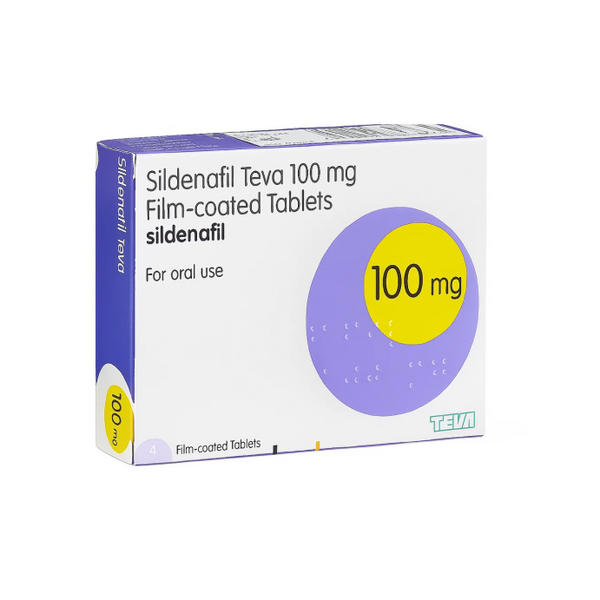
Tablets also carry restrictions a prescriber has to check, including a hard contraindication with nitrates and limits around blood pressure, recent cardiovascular events and severe liver or kidney impairment. Anyone considering sildenafil tablets online should reach that decision through a consultation rather than by comparison shopping.
Medical Disclaimer
This page is general information about categories of topical product used for erection difficulty and about UK regulation. It is not a diagnosis, a prescription or a recommendation to use any particular product, and it does not replace advice from a pharmacist or prescriber who knows your history. Figures quoted are attributed to the specific medicines they were recorded for and must not be applied to any other product. Always read the instructions supplied with any product before use.
Erection difficulty can be an early sign of a cardiovascular or metabolic condition. If yours began suddenly, is constant, or appeared alongside chest discomfort or breathlessness, arrange a clinical assessment. Seek urgent care the same day for an erection lasting more than four hours, chest pain, or sudden loss of vision or hearing.
Frequently Asked Questions
Do gels for erectile dysfunction actually work?
Licensed topical medicine has a real UK evidence base, including trials enrolling 1,732 men over twelve weeks. Device based products work by a different mechanism and are assessed through a different route, so no regulator publishes an efficacy verdict on an individual one. Whether either helps you depends on what is causing your difficulty.
What is the best gel for erectile dysfunction in the UK?
There is no single answer and this page will not rank them, because the right option depends on the cause and severity of your difficulty rather than on a league table. The useful first step is sorting which legal category a product sits in, then discussing your situation with a prescriber.
Can you buy an erectile dysfunction gel over the counter?
A product regulated as a medical device can be bought without a prescription. A licensed topical medicine cannot, because it acts pharmacologically and is prescription only. Anything else claiming to treat the condition without either status is being sold unlawfully.
Is a cream different from a gel?
Only in texture. The regulatory category, not the consistency, determines whether a product is a treatment, how it works and whether you need a prescription. The licensed prescription only option in this area happens to be a cream and a widely sold non prescription option happens to be a gel, which is coincidence rather than pattern.
How do ED gels work?
Device based gels apply a physical stimulus at the head of the penis where nerve endings are concentrated, contributing to the signalling that starts an erection. Licensed topical medicines work pharmacologically instead, by dilating blood vessels in the erectile tissue to increase blood flow.
Are erection gels safe?
For regulated products, the expected unwanted effects are local skin reactions such as burning, stinging and redness, usually short lived, plus the possibility of transfer to a partner. For unlicensed products with no marketing authorisation and no device marking, there is no meaningful safety answer, because the contents are unknown.
How can I check a product is legitimate?
Look for a CE, UKCA or CE UKNI marking, check the seller appears on the General Pharmaceutical Council register, and read the claims sceptically. A treatment claim with no licence and no device marking means the product is being supplied outside the law.
Do topical treatments transfer to a partner?
They can. In UK evidence for alprostadil cream, treatment related events were reported in 6.5 per cent of partners, all transient and resolving within two hours. That figure belongs to that product specifically, but the general principle applies to anything left on the skin. Wash your hands and follow the instructions on contact time.
Is a gel a good option if tablets did not suit me?
It is one of the reasons the topical route exists, and UK evidence notes that around 40 per cent of men discontinue their first oral treatment for lack of efficacy. Whether a different format helps depends on why the tablets did not work, which is a question for a prescriber rather than a reason to keep trying products.
What should I do if nothing is working?
Stop working through products and get assessed. Erection difficulty shares risk factors with cardiovascular disease and can be an early sign of it, and it is also associated with diabetes, blood pressure problems and certain medicines. Persistent difficulty is worth investigating rather than managing symptom by symptom.
Erection Creams UK: Licensed, Unlicensed and Why
Does Eroxon Gel Work? What the Evidence Shows
Related Posts

Does Eroxon Gel Work? What the Evidence Shows

Erection Creams UK: Licensed, Unlicensed and Why

Is There a Viagra Cream? The UK Answer