Does Eroxon Gel Actually Work? The Evidence Explained
- Shows with verified UK figures why a single success rate for any erection treatment is meaningless
- Separates the four different questions hiding inside the word works
- Explains why evidence for a device is a continuing file rather than a published verdict
- Gives a plain answer on use by women rather than a hedge
Ask whether a treatment works and you will be offered a percentage. The percentage is almost always meaningless, and this page shows you why using figures you can check.
Here is the problem in one sentence. The same medicine, studied properly, produced three completely different results depending on who was in the study.
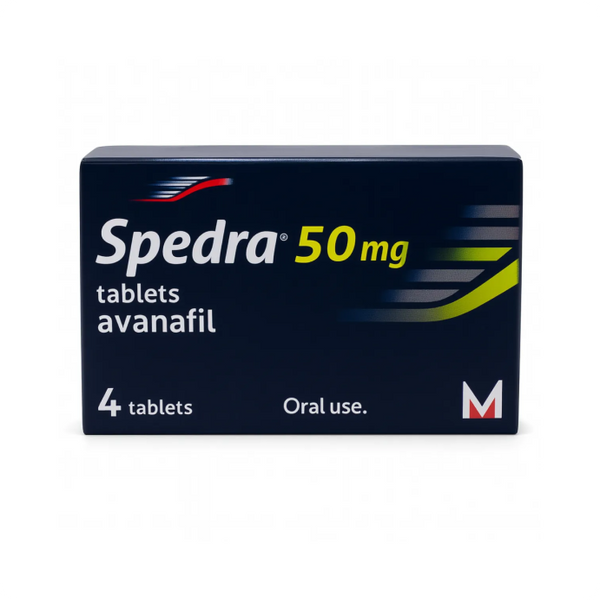
UK evidence summaries for avanafil, an oral treatment, describe twelve week randomised controlled trials measuring improvement on the International Index of Erectile Function. In a general population of 646 men, the improvement ranged from 5.5 to 9.4 points. In 390 men with diabetes, 4.6 to 5.3 points. In 298 men after prostate surgery, 3.5 to 5.2 points.
Same medicine. Same measure. Same trial length. Roughly half the benefit in the hardest group compared with the easiest.
So "does it work" has no answer until you say who you mean. A success rate without a population attached is not a fact, it is a decoration. This page takes the question apart properly instead.
Key things to know
- A success rate means nothing without knowing who was studied
- The word works hides four separate questions with four different answers
- Evidence for a device is a continuing obligation, not a one off published verdict
- Severity and cause predict the result more reliably than any average
- It is not intended for use by women and there is no evidence base for that
- Results vary between individuals, and with this mechanism they should be expected to
What "works" actually means
Four questions hiding in one
When people ask whether a treatment works, they are asking one of four things without separating them.
- Does it produce a response at all? Does anything happen.
- Is the response good enough to be useful? A partial response is not the same as a working treatment.
- Does it do that reliably? Once is interesting. Nine times out of ten is a treatment.
- Does it still do that in six months? Early response and sustained response are different findings.
Those are not degrees of the same question. They are different questions, and evidence answers them to very different standards.
Which one you are probably asking
Most people typing "does it work" mean the third one. They are not asking whether it can produce an effect. They are asking whether they can rely on it.
That is also the question with the least evidence behind it, for almost every treatment in this area.
| The question | What evidence usually covers it | How well answered |
|---|---|---|
| Does anything happen | Short trials with a defined response measure | Reasonably well |
| Is it good enough to be useful | Scored questionnaires over about twelve weeks | Reasonably well |
| Is it reliable occasion to occasion | Rarely a primary outcome | Poorly |
| Does it last months or years | Extension studies, where they exist | Patchily |
Knowing which question you are asking tells you how much weight any figure deserves. A twelve week trial result does not tell you how a product will behave for you next February.

Why there is no single success rate
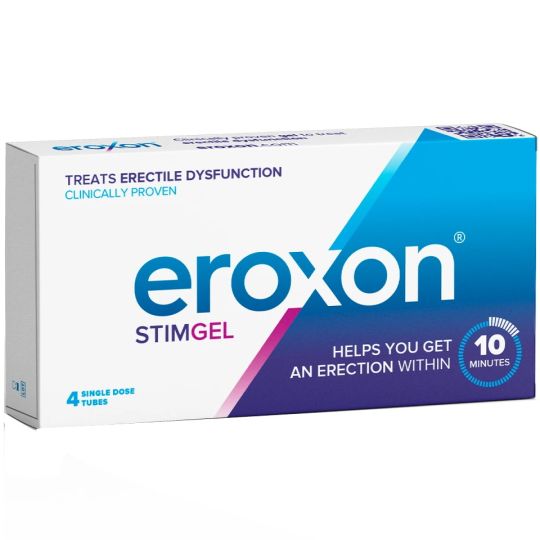
Eroxon is a topical gel designed to treat erectile dysfunction (ED) by stimulating nerve endings on the glans penis, leading to increased blood flow necessary to get an erection. Unlike oral medications, Eroxon works through a physical evaporative action that causes a gradual warming sensation, helping men achieve stronger erections within about 10 minutes. However, the success rate for this medical device varies widely depending on the population studied and the severity of ED.
This topical treatment is most effective for men with mild to moderate erectile dysfunction, where the underlying blood vessels and nerve pathways are intact but require additional stimulation. Men report that Eroxon works best when combined with arousal and intercourse attempt, as it does not replace the need for stimulation but enhances it. The product has been clinically proven in two clinical studies to help approximately 60% of men, including those with severe ED who showed improvement after 12 weeks of use.
The population decides the number
This is the most useful thing on this page, so it gets stated plainly.
A success rate is a fraction. The number on top is how many people improved. The number underneath is who you studied. Change who you studied and the fraction changes, even though the treatment did not.
Erection difficulty is not one condition. It runs from occasional and situational at one end to complete and constant at the other, and it has causes ranging from anxiety through medication effects to established vascular disease. A study in one of those groups tells you very little about another.
That is why an honest ED treatment comparison sorts options by where they act rather than by which one claims the larger number.
A worked example you can check
The avanafil figures above are the demonstration, and they are worth sitting with.
| Group studied | Participants | Improvement on the erectile function score |
|---|---|---|
| General population | 646 | 5.5 to 9.4 points |
| Men with diabetes | 390 | 4.6 to 5.3 points |
| Men after prostate surgery | 298 | 3.5 to 5.2 points |
Every one of those trials ran for twelve weeks. Every one used the same scored questionnaire. The treatment did not change between them. The population did, and the result moved by roughly half.
A marketing page could take the top of that range and print a single impressive number. It would be accurate and it would tell you almost nothing about yourself.
What to do with any percentage you read
Four questions, and if a page cannot answer all four the figure is not usable.
- Who was studied, and were they like me?
- How many people, and for how long?
- What exactly was measured, and by whom?
- Is that the whole range, or the flattering end of it?
Apply that test to every effectiveness claim you encounter, including claims about products sold by pharmacies.
What evidence exists for a device, and what does not
Eroxon Stimgel is a topical gel designed to treat erectile dysfunction (ED) by stimulating nerve endings on the glans penis, leading to increased blood flow necessary to get an erection within about 10 minutes. Unlike oral erectile dysfunction treatments, Eroxon Stimgel works through a physical evaporative action that causes a temperature drop followed by a warming sensation, helping most men achieve stronger erections quickly. However, the success rate for this medical device varies widely depending on the population studied and the severity of ED.
This topical treatment is most effective for men with mild to moderate erectile dysfunction, where the underlying blood vessels and nerve pathways are intact but require additional stimulation. Men report that Eroxon Stimgel works best when combined with arousal and intimate activity, as it does not replace the need for stimulation but enhances it. The product has been clinically proven in two clinical studies to help approximately 60% of men, including those with severe ED who showed improvement after 12 weeks of use.
Devices are assessed differently from medicines
A medicine reaches the market through a marketing authorisation based on a dossier assessed by the regulator. A device reaches the market through conformity assessment instead.
That difference has a practical consequence people are not told. There is no regulator issued verdict on an individual device that you can look up and read, in the way there is for a licensed medicine. Searching for one and finding nothing does not mean something has gone missing.
Evidence for a device is a live file, not a fixed verdict
This is the part that changes how you should think about the question.
UK guidance requires manufacturers to "actively update their clinical evaluation with data obtained from post market surveillance". The clinical evaluation is not a document finalised once and filed. It is an ongoing obligation that has to absorb what happens after the product reaches real users.
Clinical investigations of devices that are not yet marked have to be notified to the regulator. Studies of devices that already carry a mark and are used within their stated indication are exempt from that notification requirement, which is part of why post market data matters so much for this category.
What you can reasonably expect to find
You can find the regulatory category, the conformity marking, the instructions for use and the safety reporting route. You can find published evidence for the treatment class and for comparable products.
You cannot find a regulator's published efficacy verdict on this specific product, because that is not how this route works. Anyone presenting a figure as though a UK regulator endorsed it is describing something that does not exist.
That is not an argument against the product. It is an argument for knowing which kind of evidence you are looking at, so that the absence of one kind is not mistaken for a verdict either way.
Who it is most likely to work for
Severity comes first
Mild and moderate difficulty responds to more things than severe difficulty does. That holds across this whole treatment area, and it is the most reliable thing you can judge for yourself before a consultation.
A topical product adds stimulus at the start of the process that produces an erection. Where the underlying machinery is largely intact and the problem is getting the sequence reliably started, that addition has something to work with.
Where the machinery itself is impaired, adding stimulus at the surface does not repair it.
Cause comes second
The cause tells you where in the process the problem sits, which tells you whether a stimulus based approach is addressing it.
| Situation | Why it matters |
|---|---|
| Situational or intermittent difficulty | The sequence works sometimes, so it can be started |
| Anxiety about performance is dominant | The block is at the start, which is where a stimulus acts |
| Morning erections still occur | Suggests the downstream machinery is functioning |
| Established vascular disease | The limitation is blood flow, not stimulus |
| Nerve damage after pelvic surgery | The signal path itself is affected |
| Long standing diabetes with nerve involvement | Both signalling and vessels may be affected |
| Complete and constant difficulty | Points to a cause a surface stimulus will not reach |
Mild erectile difficulty specifically
This is the group the product is aimed at, and the aim is consistent with where it acts.
It is worth being precise about what mild means here. It does not mean unimportant. It means the response is present but unreliable or insufficient, rather than absent. That is a meaningful distinction clinically and it is the distinction that matters for whether a stimulus based approach has anything to build on.
Treatment suitability depends on an individual clinical assessment. Where other concerns sit alongside it, including timing and ejaculation treatment options, an online consultation with UK registered prescribers can look at the whole picture rather than one symptom.
Why it might not work for you
Five reasons, roughly in the order worth checking them.
- Technique. You are the delivery mechanism with a topical product. Applied to the wrong place, left unrubbed on the surface, or used on damp or cold skin, it will underperform for reasons that have nothing to do with whether it suits you.
- Expectation. It adds to stimulus rather than replacing it. Waiting for something to happen without arousal will not work, and this is the most common misunderstanding about the whole treatment area.
- The cause sits downstream. If blood flow or nerve function is the limitation, stimulus at the surface is not the matching intervention.
- Severity. Complete and constant difficulty is a different problem from unreliable difficulty, and responds to different things.
- Something else is driving it. Medication effects, hormonal causes, low mood, relationship distress and untreated cardiovascular or metabolic conditions all sit outside what any topical product addresses.
Reasons one and two are fixable by you, and between them they account for a large share of first attempts that go nowhere. Reasons three, four and five need a prescriber, and working through more products will not resolve any of them.
Does Eroxon gel work for women?
No, and this one deserves a straight answer rather than a hedge.
It is designed and intended for application to the head of the penis, and its effect depends on the nerve ending density at that site. It is not intended for use by women, there is no evidence base for such use, and no claim of effectiveness for it exists.
Using any product outside its intended purpose means there is no evidence, no safety data and no instructions covering what you are doing. That applies here and the honest answer is simply no.
The related question worth asking is different and is covered elsewhere: what happens when a partner comes into contact with a treated area. That is a real exposure question with real answers, and it is not the same as asking whether the product works for a second person.
Eroxon compared with tablets on effectiveness
Why a direct comparison is not available
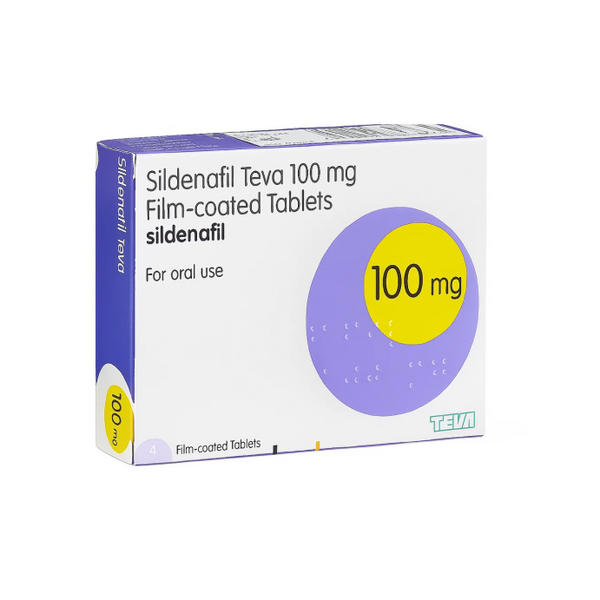
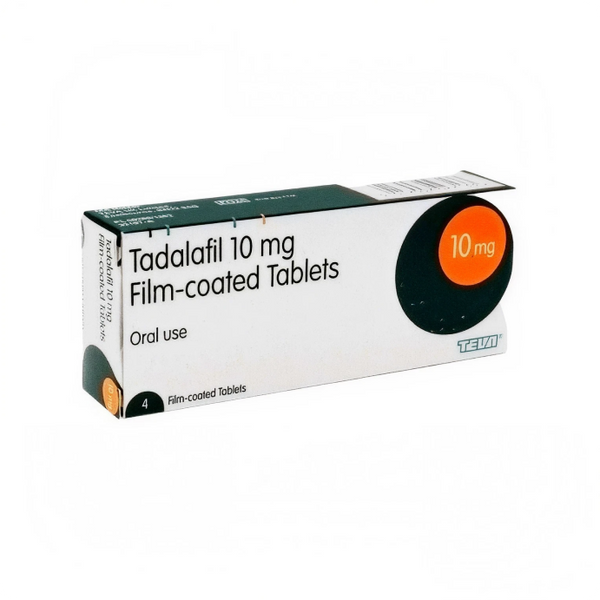
There is no head to head trial in the permitted evidence base putting this product against an oral treatment, so any page ranking one above the other is doing so without data.
Even if such a trial existed, the population problem above would apply to it. A head to head result in men with mild difficulty and a head to head result in men after prostate surgery would produce different answers, and neither would be the answer.
Medical Disclaimer
This page discusses how effectiveness is measured for treatments used in erection difficulty and what the available evidence does and does not show. It is general information, not a diagnosis, a prescription or a recommendation to use any particular product, and it does not replace advice from a pharmacist, prescriber or other qualified clinician who knows your history. Figures quoted are attributed to the specific medicines they were recorded for and must not be read across to any other product. Always read the instructions supplied with any product before use.
Erection difficulty can be an early sign of a cardiovascular or metabolic condition that needs attention in its own right. If yours began suddenly, is complete and constant, changed after starting a new medicine, or appeared alongside chest discomfort or breathlessness, arrange a clinical assessment rather than working through products. Seek urgent medical care the same day for an erection lasting more than four hours, chest pain, or sudden loss of vision or hearing.
Frequently Asked Questions
Does Eroxon gel really work?
It produces its intended effect in some people and not others, and which group you fall into depends on where your difficulty sits rather than on any overall success rate. It adds stimulus at the start of the process that produces an erection, so it has most to offer where that starting step is the problem. Results vary between individuals.
What is the success rate of Eroxon gel?
There is no single meaningful success rate for it or for any treatment in this area, because the number changes with the population studied. Verified UK trial data for an oral treatment shows the same medicine producing roughly half the improvement in men after prostate surgery compared with a general population. Any page quoting one figure without saying who was studied is not giving you usable information.
Who does Eroxon gel work best for?
The mechanism points to people with mild or intermittent difficulty, where anxiety about performance is a significant factor, where morning erections still occur, or where the timing of tablets is the real obstacle. It has less to offer where established vascular disease or nerve damage is the underlying cause.
Are there clinical trial results for Eroxon?
There is no regulator published efficacy verdict on this specific product, because devices reach the UK market through conformity assessment rather than through a marketing authorisation with a public assessment. That is a feature of the route, not a gap. Manufacturers are required to keep a clinical evaluation updated with post market data.
Does Eroxon gel work for erectile dysfunction?
It is intended for erection difficulty, and it addresses the start of the process rather than the cause of the difficulty. It does nothing about vascular disease, diabetes, hormone problems, medication effects or psychological factors, so whether it helps depends on whether one of those is the driver in your case.
How long does Eroxon gel work for?
There is no regulator published duration figure for this product, and this page will not invent one. The instructions supplied with the pack are the source for that, and a pharmacist can help you interpret them.
Does Eroxon gel work for women?
No. It is intended for application to the head of the penis and its effect depends on that site. There is no evidence base for use by women and no effectiveness claim for it.
Is Eroxon gel effective for mild erectile dysfunction?
Mild difficulty, meaning a response that is present but unreliable or insufficient rather than absent, is the situation the mechanism suits most closely. That makes it plausible in this group. It does not mean it will work for you.
Why might Eroxon gel not work for me?
In rough order of how often they apply: application technique, expecting it to work without arousal, a cause that sits downstream of where it acts, severity beyond what a stimulus can address, and an untreated condition or medication driving the problem. The first two you can fix yourself. The rest need a clinical conversation.
Should I keep trying it if it did not work the first time?
Check technique first, because that explains a large share of first attempts that go nowhere. What you should not do is apply more than the instructions state or use a second unit immediately to compensate. If several correctly applied attempts do nothing, that is useful information to take to a prescriber rather than a reason to keep going.
Related Posts

ED Gels for Men UK: What Works and What Does Not

Erection Creams UK: Licensed, Unlicensed and Why

Is There a Viagra Cream? The UK Answer