Erection Gel in the UK: Your Options Explained
- Turns the choice into three questions rather than a list of products
- Separates what is a real option from what only looks like one
- Names the situation each option was actually designed for
- Explains why the format you prefer is the least useful thing to choose by
Most pages about this list products. That is the wrong shape for the decision, because the format is not what separates your options.
Three genuinely different things are available in the UK for erection difficulty. A topical product you can buy without a prescription, a licensed cream that needs one, and oral treatment. They differ in what they contain, how they work, and who they were designed for.
Which one fits you is settled by three questions about your situation, not by whether you would rather apply something or swallow something.
This page asks those three questions, then explains what each answer points to and why. It also covers the fourth thing in the search results, which is not an option at all.
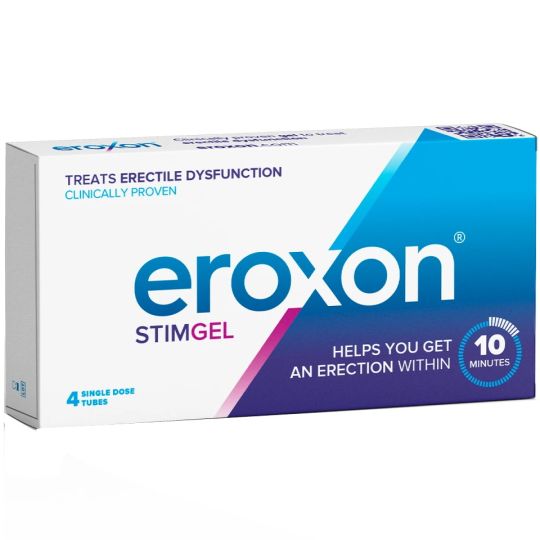
Each option involves a distinct mechanism to support penile tissue function. The topical gels, including popular products like Eroxon Stimgel, are fast acting and applied topically in single use tubes. They typically require a pea sized amount and are compatible with latex condoms, providing a rapid onset of effect to help adult men achieve a natural erection within 10 minutes when combined with appropriate stimulation.
These gels contain ingredients such as potassium hydroxide and propylene glycol, which create a cooling and warming effect that stimulates nerve endings without systemic absorption, making them a breakthrough new solution with a high safety profile and minimal side effects. Clinical trials and clinical studies support their use for mild to moderate erection dysfunction treatments, enhancing overall men's health and self esteem.
Key things to know
- Three real options exist, and they work by three different mechanisms
- The non prescription topical product is a medical device and contains no drug
- The licensed topical medicine contains a different active ingredient from the tablets
- Your situation decides the choice, not the format you would prefer
- Anything claiming to treat erection difficulty without a licence or a device marking is not an option
- Treatment suitability depends on an individual clinical assessment
The three real options at a glance
| Feature | Topical device | Licensed cream | Oral treatment |
|---|---|---|---|
| What it contains | No drug, physical action | Alprostadil | Sildenafil, tadalafil and others |
| Legal category | Medical device | Licensed medicine | Licensed medicine |
| Prescription | Not needed | Required | Prescription, or pharmacy after assessment |
| How it works | Stimulates nerve endings at the surface | Widens blood vessels in the tissue | Blocks an enzyme, via the bloodstream |
| Where it acts | Application site only | Application site | Throughout the bloodstream |
| Typical timing | Within minutes of applying | Onset described as 5 to 30 minutes | 25 minutes to an hour ahead |
| Designed for | Getting the sequence started | People tablets cannot serve | First line treatment |
Look down the last row. Those are three different jobs. That is the reason this is a decision rather than a shopping list.
Start here: which question are you actually asking?
When considering erection gel UK options, it's important to understand how different products work through various physiological processes. These treatments, including topical gel and oral medications, play distinct roles in treating erectile dysfunction (ED). Some gels come in 4 single dose tubes, offering a convenient and accessible treatment for men seeking fast action gel solutions. Unlike oral medications, topical gels like Eroxon gel work by increasing blood flow locally through a gradual warming effect and rapid cooling sensation, stimulating nerve endings at the glans penis without systemic absorption.
Choosing the right ed treatment depends on factors such as the severity of erectile problems—mild, moderate ed, or severe ed—and previous experience with other oral ed medications. While oral ed medications require systemic absorption and may have contraindications, the topical treatment offers a clinically proven alternative with fewer side effects and compatibility with latex condoms. If you experience persistent ed or other health conditions, it is important to seek medical advice from a healthcare provider before starting any treatment.
Question one: does it have to be without a prescription?
If the answer is yes, there is exactly one topical option, and it is the medical device.
A device is defined in UK guidance as something that does not achieve "its principal intended action in or on the human body by pharmacological, immunological or metabolic means", with that action "typically fulfilled by physical means". Because it is not acting as a drug, the prescription framework does not apply to it.
The licensed topical medicine cannot be supplied that way, because it does act as a drug on your blood vessels. There is no version of it available without a prescription and there is not going to be one.
Question two: have oral tablets already been tried?
If you have tried tablets and they did not suit you, that history is the most useful thing you have, and it changes what should come next.
UK evidence summaries position the licensed topical medicine for "men who cannot tolerate or have contraindications to oral treatment with PDE5 inhibitors or in whom PDE5 inhibitors are ineffective". That is a specific group, and it is a large one. The same evidence base notes that "it has been suggested that about 40% of men discontinue their first line PDE5 inhibitor therapy because of lack of efficacy".
The reason tablets did not suit matters. If they worked but the planning was intrusive, a faster format may be the answer. If they did nothing, changing format alone is unlikely to help, because the problem is probably not the delivery. If you could not take them at all because of nitrates or another restriction, that is exactly the situation the licensed cream exists for.
If you want to check your ED treatment eligibility before choosing anything, that history is what a prescriber will want first.
Question three: is it the erection or the timing?
This one catches more people than you would expect, and getting it wrong leads to the wrong product.
If you can get and keep a firm erection but ejaculation comes sooner than you want, that is a different condition with different treatments. UK evidence summaries state plainly that "it is important to distinguish premature ejaculation from erectile dysfunction".
Option one: the topical device
What it is
A gel applied to the head of the penis, regulated as a medical device rather than a medicine, available without a prescription.
It works by a physical effect. The gel evaporates quickly, cooling the skin and then letting it rewarm, and that temperature change stimulates the nerve endings concentrated in that area. Nothing is absorbed into the bloodstream.
Devices must be registered with the regulator before being placed on the Great Britain market, and they carry a conformity marking, either CE, UKCA or CE UKNI.

What it suits, and what it does not
Because it adds stimulus at the start of the process that produces an erection, it has most to offer where getting that process reliably started is the problem. Difficulty that is intermittent rather than constant, situational rather than universal, or where anxiety about performance is a significant factor.
It has less to offer where the limitation sits further along. Established vascular disease restricting blood flow, nerve damage after pelvic surgery, or long standing diabetes with nerve involvement are not addressed by stimulus at the surface.
One honest limitation
The regulator "does not approve individual devices for the UK market". Devices reach the market through conformity assessment rather than through a marketing authorisation with a published assessment, so there is no regulator verdict on an individual device to look up.
That is a feature of the route rather than a scandal, but it does mean you should treat any single headline percentage about a device the same way you would treat one about anything else. Ask who was studied, for how long, and against what measure.
Option two: the licensed prescription cream
What it is
Alprostadil cream, a licensed medicine applied to the tip of the penis. It is prescription only because it works pharmacologically.
UK evidence summaries describe alprostadil as "chemically identical to prostaglandin E1", noting that it "causes vasodilation of blood vessels in the erectile tissue of the corpora cavernosa and an increase in intracavernosal artery blood flow, resulting in an erection".
It has a real UK evidence base, including randomised controlled trials enrolling 1,732 men across 82 centres over twelve weeks, measured on the International Index of Erectile Function.
Why the prescription is the point rather than the obstacle
A product that widens blood vessels needs somebody to look at your circulation, your blood pressure, your other medicines and your history before you use it.
That assessment also catches the thing a product cannot. Erection difficulty shares risk factors with cardiovascular disease and can be an early manifestation of arterial and peripheral vascular disease, because the vessels involved are narrow and show the effects before larger ones do.
So with a prescription medicine you are not only obtaining the tube. You are obtaining the judgement about whether the tube is the right answer.
What to expect from it
Local effects are the main category. UK evidence for this cream recorded penile burning in 23.0 per cent of users, genital pain in 17.5 per cent and redness in 11.3 per cent, most resolving within two hours. Treatment related events were reported in 6.5 per cent of partners, all transient.
Those figures belong to that cream specifically and must not be applied to any other product.
Option three: oral treatment
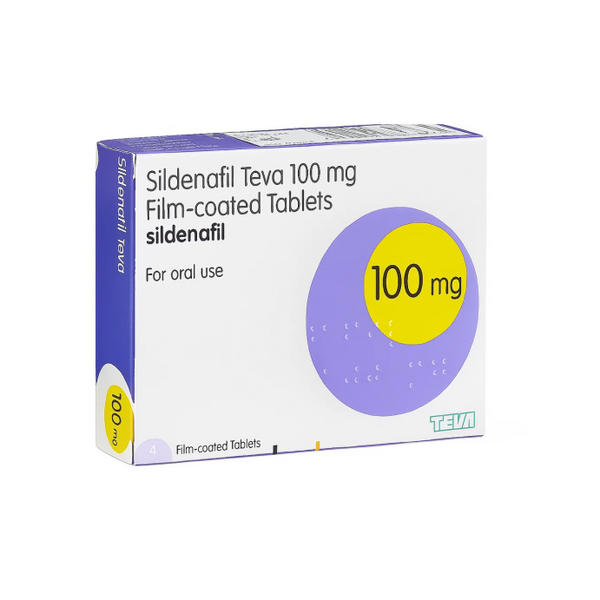
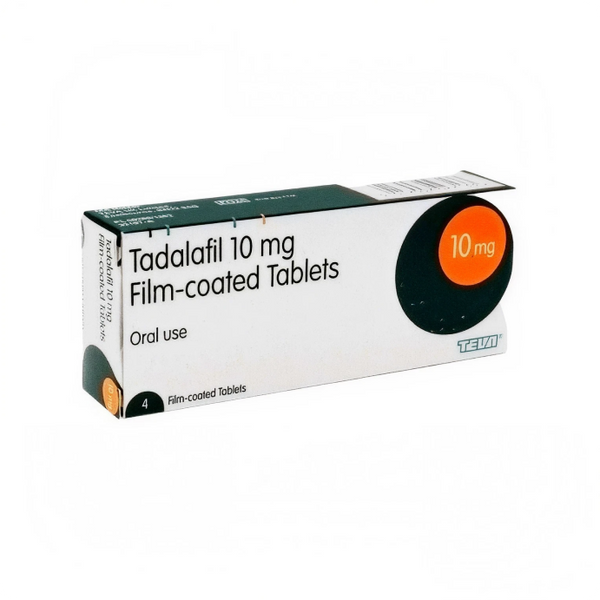
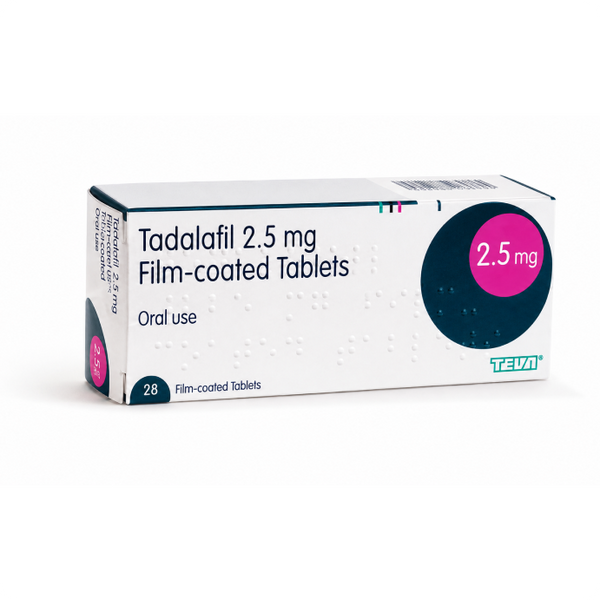
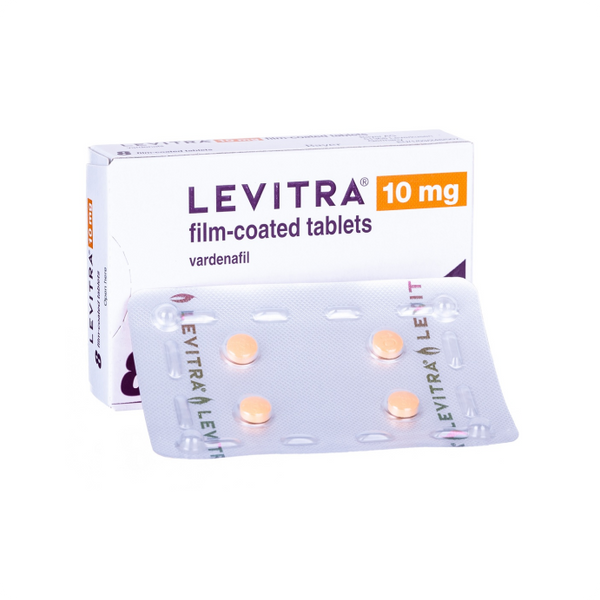
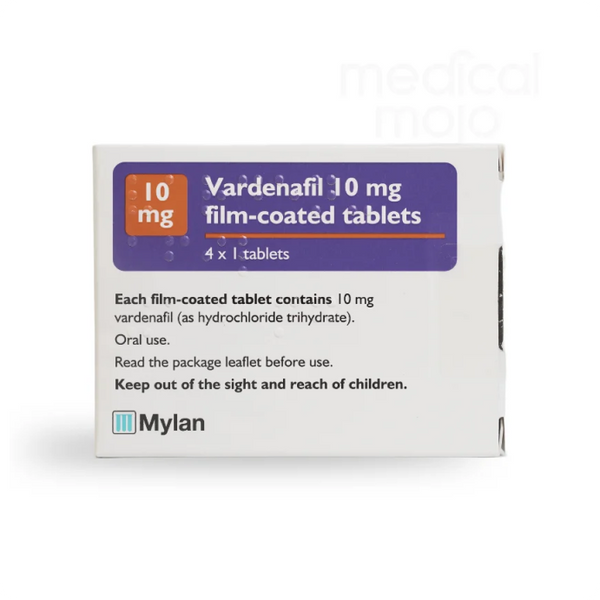
Tablets remain the first line option for most people, and the topical routes exist largely because tablets do not suit everyone.
They act by blocking an enzyme, which amplifies a signal your body has already started. UK evidence summaries are clear that this class has no effect in the absence of arousal, which is the most common misunderstanding about how they work.
They carry real restrictions a prescriber has to check. They are contraindicated with nitrates. They are restricted where blood pressure sits below 90/50 or above 170/100, after a recent cardiovascular event, and in severe liver or kidney impairment. Common unwanted effects include headache, flushing and nasal congestion.
If the problem is timing rather than the erection
This deserves its own answer, because the products overlap and the conditions do not.
UK evidence summaries describe ejaculation occurring sooner than wanted as affecting roughly 20 to 30 per cent of men, and they are explicit that it must be distinguished from erection difficulty. The two can also occur together, and guidance reflected in those summaries says that where the timing difficulty follows from an erection problem, the erection problem "should be treated before or at the same time".
The practical warning is this. The licensed product for ejaculation timing works by reducing sensation. If your difficulty is achieving or maintaining an erection, reducing sensation removes something the process relies on. Two products applied to the same place can pull in opposite directions.
So if timing is the issue, ejaculation timing treatment is the category to look at, and an online consultation with UK registered prescribers can sort out which of the two you are dealing with, or both.
What is not an option
Products claiming treatment with no licence
UK guidance sets out two limbs of the definition of a medicinal product. The first covers "any substance or combination of substances presented as having properties for treating or preventing disease in human beings", and the decisive point is that "falling under either limb is sufficient to classify a product as a medicinal product". The regulator assesses presentation across labelling, packaging, websites and social media.
So a gel presented as treating erection difficulty is legally a medicine by presentation alone, whether or not it contains anything capable of doing so. Without a marketing authorisation, and without a device marking, it is being supplied outside the law.
Why that matters more than it sounds
The regulator's position is direct. Any medicine not authorised for sale in the UK "can be unsafe or ineffective and there is no way of knowing what is in them or the negative health effects they can have". Such products may contain no active ingredient at all, or may "contain toxic ingredients which could lead to serious health consequences".
Between 2021 and 2025 the regulator's criminal enforcement unit seized around 19.5 million doses of unlicensed erectile dysfunction medicines in the UK, including 4.4 million in 2025 alone. Unlicensed products in this category are described as especially dangerous for people with heart disease or high blood pressure, or taking other medicines, and as capable of raising the risk of heart attack, stroke and dangerously low blood pressure.
What buying safely looks like
Three checks, and they take about two minutes between them.
- Check the pharmacy is registered. The General Pharmaceutical Council sets out three steps: find the registration number on the pharmacy's website, search the regulator's register by name or number, and if the pharmacy does not appear, do not buy from it. The regulator describes its register as "the only way to confirm a pharmacy is legally operating in Great Britain and is meeting standards to keep you safe".
- Check the product category matches the claim. A treatment claim with no marketing authorisation and no conformity marking is the warning sign.
- Check what arrives. Official patient guidance on devices advises confirming the regulatory markings are present and that the manufacturer's address appears on the packaging.
EveryDayMeds is a GPhC registered pharmacy, registration number 9012878, and every prescription supply follows an assessment by a UK registered prescriber.
That applies across the range, whether you are looking at a topical option or at oral sildenafil treatment. The assessment is the same piece of work either way, because it is about you rather than about the product.
Medical Disclaimer
This page is general information about the topical and oral options available in the UK for erection difficulty. It is not a diagnosis, a prescription or a recommendation to use any particular product, and it does not replace advice from a pharmacist or prescriber who knows your history. Figures quoted are attributed to the specific medicines they were recorded for and must not be applied to any other product. Always read the instructions supplied with any product before use.
Erection difficulty can be an early sign of a cardiovascular or metabolic condition. If yours began suddenly, is constant, or appeared alongside chest discomfort or breathlessness, arrange a clinical assessment. Seek urgent care the same day for an erection lasting more than four hours, chest pain, or sudden loss of vision or hearing.
Frequently Asked Questions
Which erection gel should I choose?
That depends on your answers to three questions: whether you need to avoid a prescription, whether tablets have already been tried, and whether the problem is the erection or the timing. Those three between them point to one of three genuinely different options, and the format you would prefer is the least useful thing to decide by.
Does erection gel work?
The licensed topical medicine has a real UK evidence base with defined populations, duration and outcome measures. The device based product works by a different mechanism and is assessed through a route that produces no published regulator verdict. Whether either helps you depends on the cause of your difficulty, and results vary between individuals.
Can I get an erection gel without a prescription?
Yes, the medical device. It contains no drug and works by a physical effect at the application site, which is why the prescription framework does not apply to it. The licensed topical medicine cannot be supplied without a prescription, because it acts pharmacologically.
Is erection gel safe?
For regulated products, the expected unwanted effects are local skin reactions such as burning, stinging, redness and irritation, usually short lived, plus the possibility of transfer to a partner. For unlicensed products there is no meaningful safety answer, because the contents are unknown.
What is the difference between a gel and a cream here?
The words describe texture. The real difference is that the non prescription gel is a device working by physical stimulus and contains no drug, while the licensed cream is a medicine containing alprostadil that widens blood vessels and needs a prescription. Same area of the body, completely different categories.
Gel or tablets, which is right for me?
They act at different points on the same process, so it is not a ranking. Tablets amplify a signal that already exists. A device based gel helps generate one. The licensed cream acts on the blood vessels directly. Which fits depends on where your difficulty sits, which is what an assessment establishes.
How do I use an erection gel?
Follow the instructions supplied with the product, which are the controlled document and take precedence over any web page. In general terms, topical products in this area are applied to the head of the penis rather than the shaft, worked into the skin rather than left on the surface, and followed by washing your hands.
Are gel reviews from other users a useful guide?
Individual accounts are a poor guide here and we do not publish ratings, review counts or testimonials. Response varies with the underlying cause, so two people with the same diagnosis label can report completely different experiences of the same product and both be accurate.
What are the side effects of erection gel?
Local skin effects at the application site are the expected category for any topical product, usually short lived. Transfer to a partner is possible. The specific profile for any given product is in the instructions supplied with it, and anything that persists, spreads or worsens with repeated use is a reason to stop and speak to a pharmacist.
How do I know a seller is legitimate?
Find the pharmacy's registration number on its website and search the General Pharmaceutical Council register by name or number. If it does not appear, do not buy from it. That check rules out the great majority of illegitimate sellers and takes under two minutes.
Topical ED Treatments UK: The Complete Picture
ED Sprays UK: What the Licensed Spray Really Treats
Related Posts

Does Eroxon Gel Work? What the Evidence Shows

ED Gels for Men UK: What Works and What Does Not

Erection Creams UK: Licensed, Unlicensed and Why

Is There a Viagra Cream? The UK Answer