Spedra vs Vardenafil: Which Is Better for Erectile Dysfunction?
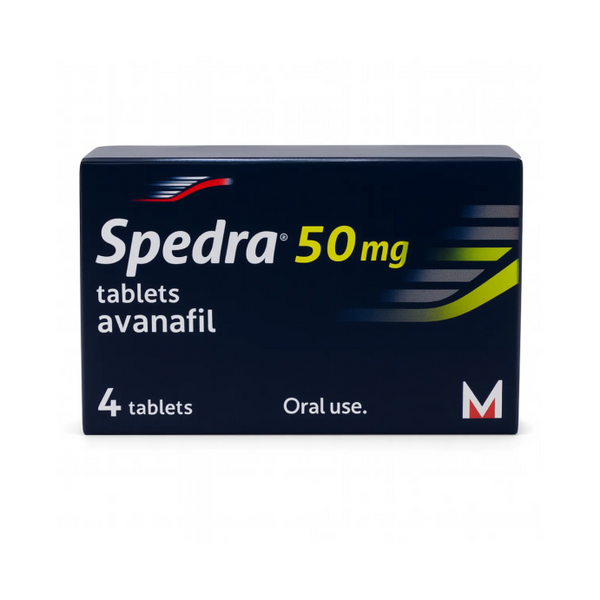
Spedra and vardenafil are both prescription medicines for erectile dysfunction, but they are not the same.
Spedra contains avanafil and is usually taken 15 to 30 minutes before activity. Vardenafil is usually taken 25 to 60 minutes beforehand, and has a longer clinical track record.
Neither can accurately be described as universally better, because effectiveness, side effects and suitability all vary between individuals.
The more useful question is which fits your timing preferences, medical history and tolerability. Both belong to the phosphodiesterase type 5 inhibitor class, and the practical differences that guide prescribing are onset, dose options, duration, food effects, side effects and interactions.
European Association of Urology guidance states that all four major PDE5 inhibitors have established effectiveness, and concludes that no overall differences in treatment effectiveness have been demonstrated between them.
Key things to know
- Spedra has the shorter standard pre-dose window, at 15 to 30 minutes against vardenafil's 25 to 60
- Vardenafil has the shorter elimination half-life
- Guideline summary data show lower reported rates of several common side effects with avanafil, although not from a head-to-head trial
- Milligram strengths cannot be compared between the two medicines
- Both require sexual stimulation, and neither should be taken more than once per day
- Neither may be combined with nitrates or riociguat
Quick Comparison
| Feature | Spedra | Vardenafil |
|---|---|---|
| Active ingredient | Avanafil | Vardenafil |
| Medicine class | PDE5 inhibitor | PDE5 inhibitor |
| Starting dose | 100mg | 10mg |
| Other standard doses | 50mg, 200mg | 5mg, 20mg |
| Maximum standard dose | 200mg | 20mg |
| Typical timing | 15 to 30 minutes beforehand | 25 to 60 minutes beforehand |
| Maximum frequency | Once daily | Once daily |
| Median time to peak level | About 30 to 45 minutes | About 60 minutes fasting |
| Approximate half-life | 6 to 17 hours | About 4 hours |
| Food effect | A meal may delay onset | A high-fat meal may delay onset |
| Requires stimulation | Yes | Yes |
What Each One Is
Spedra is the UK and European brand name for avanafil, a prescription PDE5 inhibitor. UK listings include 50mg, 100mg and 200mg tablets, with a recommended starting dose of 100mg taken approximately 15 to 30 minutes beforehand.
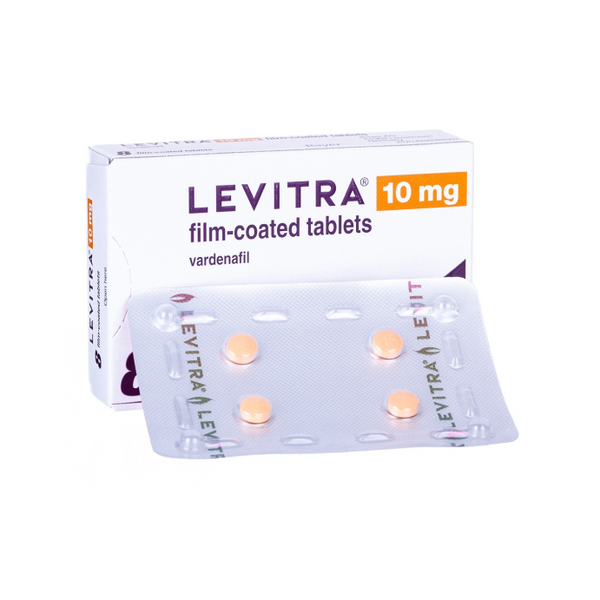
Vardenafil is the generic name for medicines previously sold under the brand Levitra. UK-authorised products are available as 5mg, 10mg and 20mg film-coated tablets, with a usual starting dose of 10mg taken 25 to 60 minutes beforehand.
Depending on effectiveness and tolerability, vardenafil may be reduced to 5mg or increased to a maximum of 20mg. Neither medicine should normally be used more than once per day.
Are They the Same Medicine?
No. They belong to the same class but contain different active ingredients.
Both inhibit PDE5. During sexual stimulation, nitric oxide signalling increases levels of a messenger called cGMP within erectile tissue, which relaxes smooth muscle and allows blood flow to increase. PDE5 normally breaks cGMP down, so inhibiting it maintains that natural pathway for longer.
Can You Compare the Milligrams?
No. Spedra 100mg and vardenafil 10mg are their respective usual starting doses, but that does not mean one is ten times stronger than the other.
The medicines have different chemical potencies and pharmacokinetic properties, and require different amounts of active ingredient to produce their intended effect.
The same applies at the top of each range. Spedra 200mg and vardenafil 20mg are the respective maximum standard strengths, and neither should automatically be chosen first.
Onset and Duration
Spedra has the shorter standard pre-dose window. It is normally taken 15 to 30 minutes beforehand, against 25 to 60 minutes for vardenafil.
So for someone comparing the authorised instructions alone, Spedra offers a shorter planned wait. Vardenafil can also act quickly, though.
Can Either Work in 15 Minutes?
Both can, for some men.
In avanafil trials designed specifically to assess onset, successful intercourse occurred in approximately 24.7% of attempts with 100mg and 28.2% with 200mg at around 15 minutes, compared with approximately 13.8% with placebo.
Clinical pharmacology studies found that vardenafil 20mg produced erections sufficient for penetration in some participants from approximately 15 minutes, with the overall response becoming statistically significant against placebo at about 25 minutes.
In both cases, 15 minutes represents an early possible response rather than a guaranteed onset, and neither finding changes the standard dosing advice.
Peak Levels
Avanafil is rapidly absorbed, reaching maximum plasma concentrations at a median of approximately 30 to 45 minutes on an empty stomach.
For film-coated vardenafil, maximum levels are reached as early as 15 minutes in some men, but around 90% reach peak concentration within 30 to 120 minutes, with a median of approximately 60 minutes when fasting.
That pharmacokinetic difference is what supports Spedra's shorter standard pre-dose instructions.
Which Lasts Longer?
The two have different elimination profiles. European guideline data give approximate half-lives of 6 to 17 hours for avanafil and around 4 hours for vardenafil.
Half-life should not be treated as identical to the clinical duration of benefit. A longer half-life does not mean a continuous erection, or that a medicine provides a clinically useful response for exactly that number of hours.
Vardenafil studies have shown erectile responses remaining greater than placebo in some participants attempting activity four to five hours after dosing.
Neither Works Automatically
Both require stimulation. Spedra's UK prescribing information states this explicitly, and the same applies to vardenafil.
Taking a tablet does not cause an erection after 15 or 30 minutes. The difference in onset times refers to when each medicine may begin supporting the erectile response, not when an automatic erection appears.
Food
Food can delay the onset of both, particularly a high-fat meal.
For Spedra, a high-fat meal delayed the time to maximum concentration by approximately 1.25 hours and reduced peak concentration by around 39%, without materially changing total exposure. A large meal can delay onset to as much as 90 minutes.
For vardenafil, a high-fat meal delayed the median time to peak concentration by approximately one hour and reduced peak concentration by about 20%.
Neither is completely unaffected. If rapid onset matters, taking either immediately after a substantial high-fat meal makes timing less predictable.

Effectiveness
Current evidence does not establish either as universally more effective.
European guidance states specifically that no differences in treatment effectiveness have been demonstrated among the approved PDE5 inhibitors. For avanafil, the guideline cites a meta-analysis finding effectiveness comparable with sildenafil.
Individual responses can still differ. Someone may respond better to avanafil than vardenafil, or the reverse, even though both act through the same broad pathway.
The Trial Figures
In general-population trials, the average percentage of attempts resulting in successful intercourse was approximately 47% with avanafil 50mg, 58% with 100mg and 59% with 200mg, against approximately 28% with placebo.
In broad fixed-dose vardenafil studies, successful penetration was reported in approximately 68% at 5mg, 76% at 10mg and 80% at 20mg, against approximately 49% with placebo. Successful maintenance of an erection was reported in approximately 53%, 63% and 65% respectively, against around 29% on placebo.
One takeaway applies to both: increasing to the maximum dose produced only a small average improvement. The maximum is not automatically the best dose.
Why These Figures Cannot Be Compared Directly
These come from different trial programmes, so they should not be read as a head-to-head ranking.
Different trials involve different patient populations, severity of erectile dysfunction, study durations, outcome definitions, dosing protocols and placebo response rates.
Comparing 59% from an avanafil study with 80% from a separate vardenafil study does not prove vardenafil is superior. The guideline assessment is the more appropriate one: all four major PDE5 inhibitors are effective, and no clear overall difference has been demonstrated.
Side Effects
Both produce typical effects for the class, including headache, flushing, nasal congestion and dizziness. Their reported frequencies differ.
| Side effect | Vardenafil | Avanafil 200mg |
|---|---|---|
| Headache | 16% | 9.3% |
| Flushing | 12% | 3.7% |
| Nasal congestion | 10% | 1.9% |
| Indigestion | 4% | Uncommon |
| Dizziness | 2% | 0.6% |
| Back pain | Not prominent in the data | Under 2% |
These are population-level figures from guideline summary data. They give a general idea of reported patterns, but cannot predict what an individual will experience.
Does Spedra Have Fewer Side Effects?
The guideline summary shows lower reported percentages for several common effects with avanafil 200mg, including headache, flushing, nasal congestion and dizziness.
That does not prove every individual will tolerate Spedra better. The data are assembled from regulatory evidence rather than a single large head-to-head trial.
Someone who develops headaches on one PDE5 inhibitor may not have the same problem with another, which is a reasonable thing to raise with a prescriber.
Each Medicine's Own Profile
Spedra's patient leaflet lists headache, flushing and nasal congestion as common. Uncommon effects include dizziness, sleepiness, tiredness, sinus congestion, back pain, palpitations, increased heart rate, indigestion, nausea or vomiting, and blurred vision.
UK vardenafil information classifies headache as very common. Dizziness, flushing, nasal congestion and indigestion are common. Less common effects include visual disturbance, palpitations, faster heart rate, reflux, nausea, back pain, muscle pain and rash.
Rare serious effects for both include a prolonged erection, sudden loss of vision and sudden loss of hearing.
Vision
Both can cause visual symptoms.
Spedra's UK patient information lists blurred vision as uncommon and warns about rare serious visual changes requiring prompt assessment. Vardenafil lists visual disturbance, eye redness, altered colour vision, eye discomfort and light sensitivity among uncommon effects.
Sudden significant loss or reduction of vision after either medicine needs urgent medical advice.
Does Avanafil's Selectivity Explain the Difference?
Possibly in part. Laboratory studies show avanafil has high selectivity for PDE5 compared with PDE6, the enzyme involved in the retina.
Spedra's information reports that its action is more than 100-fold more potent on PDE5 than PDE6. Vardenafil's reports more than 15-fold selectivity.
That laboratory difference is pharmacologically interesting, but it should not be translated into a guarantee that avanafil never causes visual symptoms. Blurred vision remains a listed uncommon effect.
Interactions and Safety
Both are metabolised substantially through CYP3A4, so medicines inhibiting that enzyme can increase exposure. The precise restrictions differ.
For Spedra, potent CYP3A4 inhibitors including certain antifungal, antiviral and antibiotic medicines are contraindicated. With moderate inhibitors, the maximum avanafil dose is 100mg with at least 48 hours between doses.
For vardenafil, dose adjustments are needed instead. With erythromycin or clarithromycin, the dose should not exceed 5mg.
Clarithromycin is a useful example of why interaction profiles influence the choice: it requires a reduced vardenafil dose, but is contraindicated with Spedra altogether.
Tell your prescriber about all your other medicines and any herbal remedies before starting or switching.
Nitrates and Riociguat
Neither medicine may be taken with nitrates or nitric oxide donors, because the combination can cause excessive and potentially dangerous lowering of blood pressure.
Neither may be combined with riociguat either, a guanylate cyclase stimulator, for the same reason. Spedra's UK information lists the combination as contraindicated, and the same principle applies to vardenafil.
This restriction applies regardless of which medicine appears to have fewer side effects in general trial data.
Vardenafil's Heart Rhythm Precaution
UK vardenafil information contains a specific warning about QT prolongation.
Vardenafil is best avoided in people with relevant risk factors, including congenital QT prolongation and treatment with certain antiarrhythmic medicines.
That makes the medicine history particularly important when deciding between vardenafil and another PDE5 inhibitor.
Can You Take Them Together?
Do not combine them independently.
Both act on the same pathway, so combining them could increase total PDE5 inhibition and raise the risk of low blood pressure, dizziness, headache, flushing, palpitations and prolonged erections.
If one is not working adequately, treatment should be reviewed rather than a second PDE5 inhibitor added.
Switching Between Them
Switching is possible following an appropriate prescribing review.
European guidance notes that some people may respond better to one PDE5 inhibitor than another, although robust randomised evidence proving a consistent switching advantage is limited.
A poor response to vardenafil does not automatically mean Spedra will fail, and the reverse is equally true.
What to Check First
Before declaring either medicine ineffective, check:
- Dose
- Timing
- Whether a high-fat meal was involved
- Whether appropriate stimulation occurred
- Medicine authenticity
- Other medicines
- Underlying causes
European guidance specifically identifies incorrect dosing, timing and food effects as common explanations for apparent PDE5 inhibitor failure. Improving how the existing medicine is used can sometimes restore an adequate response without switching at all.
So Which Is Better?
There is no universal winner.
Spedra may suit someone who prioritises:
- A 15 to 30 minute standard pre-dose window
- Rapid absorption
- Potentially lower rates of some common side effects in guideline summary data
- An alternative after an unsatisfactory response to another PDE5 inhibitor
Vardenafil may suit someone who prioritises:
- An established shorter-acting on-demand treatment
- A 5mg, 10mg or 20mg dose range
- A shorter elimination half-life
- A medicine they have previously found effective and well tolerated
Spedra's faster recommended timing does not make it universally better. One person may respond extremely well to vardenafil 10mg with few side effects, while another prefers avanafil for its faster planned onset or tolerability.
Some people cannot use Spedra because of medicine interactions, but remain candidates for appropriately adjusted vardenafil.
European guidelines are clear that there is no proven overall effectiveness winner among PDE5 inhibitors, so the choice needs to be individualised. How long vardenafil lasts for you specifically is one of the things worth discussing at an assessment.