Vardenafil: Uses, Dosing, Interactions and Safety Explained
- Every vardenafil prescription is reviewed individually by a UK-registered prescriber before dispensing
- Medication is sourced through a GPhC-registered pharmacy, not unverified overseas suppliers
- Online consultation with UK-registered prescribers, available without a GP referral
- Ongoing clinical support if your treatment needs reviewing
Vardenafil in the BNF refers to the British National Formulary guidance for a prescription-only medicine licensed in the UK to treat erectile dysfunction in men aged 18 and over. For men in the UK who are considering or already using prescribed vardenafil tablets, this guide brings together the clinical detail people usually look for in one place: what it is licensed for, how it works, how it is dosed under UK guidance, including for men aged 18 and over and people with liver or kidney conditions, who should not take it, what it interacts with, which side effects and emergency warning signs matter, and how prescribing and monitoring are handled.
Everything here reflects vardenafil's UK licensing and prescribing information. That matters if you want treatment that is both safe and appropriate to your medical history, because vardenafil prescribing depends on individual assessment, contraindications, cautions, and dose selection rather than guesswork. It is written to be genuinely useful whether you are starting treatment, reviewing your options, or looking for a clear, complete reference rather than scattered snippets.
What Is Vardenafil Licensed to Treat?
Vardenafil is licensed in the UK to treat erectile dysfunction in men aged 18 and over. It belongs to a class of medicines called PDE5 inhibitors, which work by relaxing the muscle walls in blood vessels and increasing blood flow to the penis to help produce and maintain an erection. It does not create stimulation on its own, and sexual stimulation is still required, so a man must be sexually aroused or sexually stimulated for the medicine to help keep an erection; it also does not treat any underlying cause of erectile dysfunction directly.
How Vardenafil Behaves in the Body
Vardenafil typically starts working within 30 to 60 minutes of being taken and its effects last around 4 to 5 hours, though this varies between individuals. Food has a smaller effect on vardenafil than on some other medicines in its class, though a high-fat meal can still reduce and delay how much reaches the bloodstream, by roughly 18 to 20% in terms of peak concentration. Vardenafil is broken down mainly by the liver, which is the underlying reason dosing is adjusted for people with reduced liver function, and it is cleared from the body predominantly through the gut rather than the kidneys, which is part of why kidney impairment has a smaller effect on dosing than liver impairment does.
Available Formulations
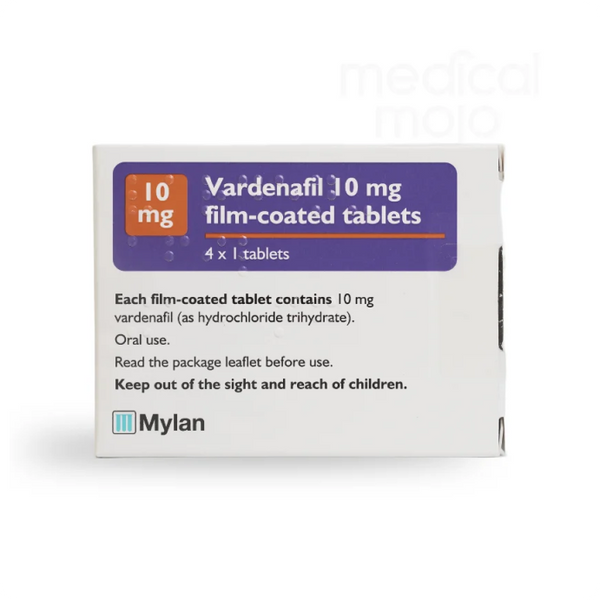
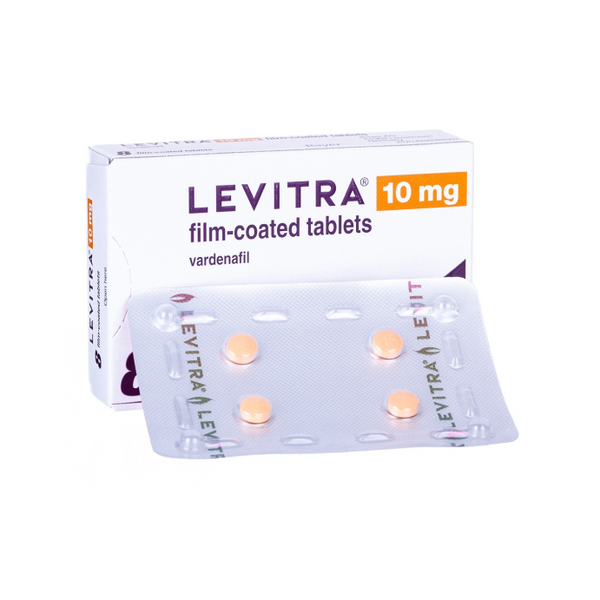
Vardenafil is available in tablet form, including film-coated tablets. The specific formulations and strengths available can depend on the licensed product. The two formats are not automatically interchangeable dose-for-dose, and which one is appropriate is a decision made by a prescriber based on individual circumstances, such as where taking a tablet with water is not practical.

How Vardenafil Is Dosed
Standard Dosing for men aged 18 and over
| Strength | Format | Typical role |
|---|---|---|
| 5mg | Film-coated tablet | May be recommended as a lower dose |
| 10mg | Film-coated tablet | The usual recommended starting dose |
| 20mg | Film-coated tablet | The maximum recommended dose |
For vardenafil dosage, 5mg 10mg and 20mg film-coated tablets are selected by a prescriber based on your health, response, and tolerability. Clinical trials found that vardenafil improved the ability to achieve and maintain an erection, although results varied by dose and study. The appropriate dose should be selected based on individual response and tolerability.
Only one dose should be taken in any 24-hour period, regardless of strength. Dose can be adjusted up or down by a prescriber based on effectiveness and tolerability, within this licensed range.
Dosing in men aged 18 and over
No routine dose adjustment is required based on age alone. However, the usual individual factors, including other medicines and overall health, should be considered when deciding whether a dose increase is appropriate
Dosing With Liver Problems (Hepatic Impairment)
Vardenafil is cleared more slowly by a liver that is not working at full capacity, so dosing is adjusted accordingly.
| Degree of liver impairment | Dosing guidance |
|---|---|
| Mild to moderate | A starting dose of 5mg is recommended. |
| Moderate (specifically) | A starting dose of 5mg is recommended and the dose should not exceed 10mg |
| Severe | Vardenafil is not recommended |
Dosing With Kidney Problems (Renal Impairment)
No dose adjustment is generally required for mild to moderate kidney impairment. For more significant kidney impairment, the evidence base is more limited, and any decision needs to be made individually by a prescriber, taking your overall health into account. Vardenafil has not been evaluated in people requiring dialysis.
Who Should Not Take Vardenafil?
Absolute Contraindications
Vardenafil should never be taken by anyone using nitrates (in any form, including short-acting sprays used occasionally) or nicorandil for angina. Combining either of these with vardenafil can cause a dangerous, potentially life-threatening drop in blood pressure. This is an absolute rule, not a caution to weigh up, and applies regardless of dose or how well vardenafil has previously been tolerated.
Vardenafil also shouldn't be taken by people with a personal or family history of congenital QT prolongation, or by anyone with certain serious existing heart conditions and other relevant health conditions, given its own effect on heart rhythm (covered in more detail below). If these apply, speak to a healthcare professional before use.
Who Needs Extra Caution?
Several groups of people can generally take vardenafil but need closer individual assessment first, because certain medications and health conditions do not automatically rule treatment out but should be reviewed by a healthcare professional:
- People taking Class IA or Class III antiarrhythmic medicines, because of the combined effect on heart rhythm.
- People with uncontrolled high or low blood pressure.
- People with certain existing heart conditions, including a recent heart attack or stroke.
- People taking alpha-blocker medicines, where timing between doses matters.
- People with significant liver impairment, where dosing needs individual adjustment as set out above.
None of these rules vardenafil out automatically, but they are exactly the kind of individual factors a proper clinical assessment is designed to identify before treatment starts.
Why These Cautions Exist
Cautions differ from contraindications in an important way. A contraindication means a medicine should not be used at all in that situation. A caution means the medicine may still be appropriate, but only after weighing individual risk factors and, sometimes, adjusting the dose or monitoring more closely. This distinction is exactly why a one-size-fits-all approach to any prescription-only medicine does not work, and why an individual assessment, rather than a standard questionnaire alone, is the basis for a safe prescribing decision.
Interactions With Other Medicines
Nitrates and Nicorandil
As set out above, this combination is absolutely contraindicated because of the risk of a dangerous drop in blood pressure. There is no dose or timing adjustment that makes this combination safe.
Alpha-Blockers
Vardenafil can cause an additional reduction in blood pressure when taken with alpha-blockers. The appropriate timing and dose depend on the particular alpha-blocker, so this combination should be reviewed by a prescriber
Grapefruit
Grapefruit or grapefruit juice may affect the way some medicines are metabolised. If you regularly consume grapefruit, ask your prescriber or pharmacist whether you should avoid it while taking vardenafil.
Combining With Another ED Medicine
Vardenafil should not be combined with other ED medicines or other erectile dysfunction medications, including prescription ED medicines taken for the same purpose. Taking two together compounds the effect on blood pressure and increases the risk of side effects, without any established extra benefit.
Vardenafil and Heart Rhythm: The QT Interval
Vardenafil can prolong the QTc interval in a dose-related manner. Because of this potential effect on cardiac rhythm, it should not be used in people with congenital QT prolongation and requires caution with certain antiarrhythmic medicines. The clinical significance of the QT effect should be considered as part of the overall prescribing assessment.
Common Side Effects
Headache is one of the most common side effects reported with vardenafil and affects more than 10% of users; other commonly reported effects include facial flushing, nasal or sinus congestion, indigestion, dizziness, and blurred vision. These tend to be more likely at higher doses. Most reported side effects are mild to moderate. If symptoms are severe, persistent or concerning, speak to a healthcare professional.
When to Seek Urgent Medical Attention
An erection lasting more than four hours requires urgent medical attention. Sudden loss or decrease of vision or hearing also requires immediate medical attention. Do not wait for these symptoms to resolve on their own. Anyone experiencing any of these after taking vardenafil should contact a doctor immediately and seek urgent medical attention rather than waiting to see if it resolves.
Side Effects and Dose
Side effects generally become more likely as dose increases, which is one of the practical reasons prescribers usually start at a lower or standard dose rather than the maximum, even where the maximum is ultimately appropriate for someone. If side effects are troublesome at a given dose, that is worth raising at a review rather than working around on your own, since a lower dose or a different approach may suit you better. Milder side effects often settle within a few hours, but persistent problems should be reviewed.
What to Do If You Miss a Dose or Take Too Much
Vardenafil is not taken on a daily schedule, so there is no "missed dose" in the way there is with regularly scheduled medicines. It is taken as needed, one dose at a time, with at least 24 hours between doses. Never take a second dose or more than one tablet in 24 hours, even if the first dose did not seem to work.
If more than the recommended dose has been taken, or if a rapid or irregular heartbeat, chest pain, severe dizziness or fainting develops, seek urgent medical attention. Side effects generally become more likely, without a reliable increase in benefit, at doses above what is been prescribed.
How Vardenafil Is Prescribed and Monitored
What a Genuine Online Consultation Involves
A proper online consultation with UK-registered prescribers starts with a health questionnaire covering your medical history, current medications, and heart health, because vardenafil is a prescription only medication and requires a prescription if you buy vardenafil online. Online consultations can take about 5 minutes, depending on the information provided. This is reviewed individually before anything is prescribed, including checks for other medications such as certain antibiotics like erythromycin and any recreational drugs, and it is specifically designed to identify the contraindications and cautions set out above before treatment begins. If approved, treatment can be delivered discreetly to your home. Ongoing clinical support is available if your dose or treatment needs reviewing over time.
Medical Disclaimer
This page is for general information only and does not replace personalised medical advice. Treatment suitability depends on an individual clinical assessment, and your prescriber will determine the appropriate treatment and dose for you. This medicine should only be used under the supervision of an appropriately qualified prescriber. Results vary between individuals. If you believe you have taken more than the recommended dose and experience a rapid or irregular heartbeat, chest pain, severe dizziness or fainting, seek urgent medical attention.
Frequently Asked Questions
What is vardenafil used for?
What is the maximum dose of vardenafil?
Does vardenafil need a lower dose for people with liver problems?
Does vardenafil need a lower dose for people with kidney problems?
Can men aged 18 and over take vardenafil?
What medicines should never be combined with vardenafil?
What is QT prolongation, and why does it matter with vardenafil?
What are the most common side effects of vardenafil?
Can I take vardenafil with an alpha-blocker medicine?
Can I combine vardenafil with another erectile dysfunction medicine?
What should I do if I think I have taken too much vardenafil?
What symptoms mean I should get emergency help after taking vardenafil?
Is grapefruit safe to have with vardenafil?
How is the right dose of vardenafil decided?
Does food affect how well vardenafil works?
What formulations of vardenafil are available?
What is the difference between a contraindication and a caution?
Levitra Active Ingredient: What is Actually In It?
Vardenafil and Dapoxetine: Is There a Combined Tablet?
Related Posts


Viagra Pharmacy UK: How Sildenafil Supply Works

Do You Need a Prescription for Viagra in the UK?

Can You Buy Viagra Over the Counter in the UK?


Viagra Price UK: Understanding Sildenafil Costs