Sildenafil Dosage Explained: Starting, Standard and Maximum Doses
- The three licensed UK strengths set out plainly, with the documented daily limit alongside them
- The difference between a maximum strength and a maximum frequency, which most pages blur together
- A symptom based way to tell a dose that is too high from one that is too low, and what to report
- Online consultation with UK registered prescribers, dispensed by a GPhC registered pharmacy, registration number 9012878
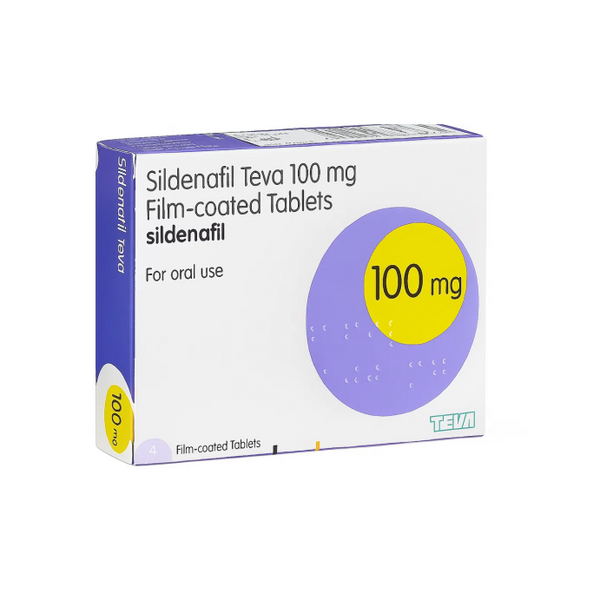
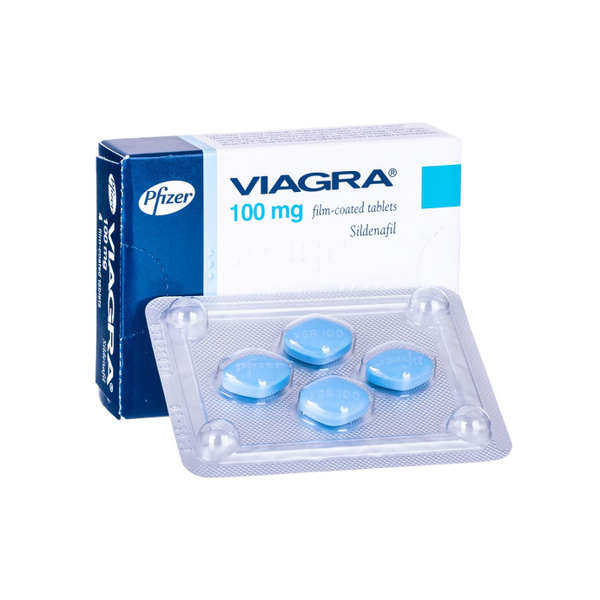
For erectile dysfunction, sildenafil is available in 25mg, 50mg and 100mg strengths in UK product information. The maximum recommended dose is 100mg, and the maximum recommended dosing frequency is once per day.
That last sentence is the part people find frustrating, so this page explains what sits behind it rather than leaving it as a brush off. Treat it as a sildenafil dosage guide rather than a set of sildenafil dosage instructions: you will find the licensed strengths, the documented limits, the published effectiveness figures broken down by strength, what a prescriber is actually weighing, and how to tell whether a strength is not working for you.
What you will not find is a number to start on or a schedule for moving between strengths. Those are prescribing decisions, and a website that hands them out is not being helpful. It is being reckless. Treatment suitability depends on an individual clinical assessment, especially when considering underlying health conditions such as cardiovascular disease or hepatic impairment.
Key things to know
- Licensed UK strengths for erectile dysfunction are 25mg, 50mg and 100mg.
- The maximum recommended dosing frequency for sildenafil for erectile dysfunction is once per day, and the maximum recommended dose is 100mg.
- A 20mg tablet also exists but belongs to a different licence for a different condition.
- Reported improvement in trial data was 62 per cent at 25mg, 74 per cent at 50mg and 82 per cent at 100mg, against 25 per cent on placebo.
- In the cited trial data, all three strengths showed higher reported improvement than placebo, with higher response rates at higher strengths.
- Product information notes that a 25mg prescription strength may be more suitable for people with severe renal impairment or severe liver impairment, who are told to consult a doctor first.
- Changing strength is a prescribing decision, not something to adjust yourself.
- Taking sildenafil requires sexual stimulation to be effective. The medicine enhances blood flow to the erectile tissue but does not cause an erection without arousal.
- Sildenafil citrate is the active compound in all licensed sildenafil dosage forms.
- The maximum recommended dosing frequency is once per day to reduce the risk of adverse drug interactions and side effects.
- Avoid taking sildenafil with grapefruit juice, as it can increase sildenafil exposure and the risk of side effects.
- Patients taking alpha blockers should be stable on these medications before starting sildenafil, and a lower starting dose may be advised to minimise the risk of hypotension.
- High-fat meals can delay the effects of sildenafil, so it is recommended to take it on an empty stomach or avoid heavy meals beforehand.
- Prolonged erection or priapism is a serious side effect. Seek medical attention if an erection lasts longer than four hours.
- Sildenafil is also licensed to treat pulmonary hypertension, but the dosage and prescribing route differ from those for erectile dysfunction.
- Clinical trials have demonstrated the efficacy and safety profile of sildenafil at the licensed doses, but professional medical advice is essential for individual dosing decisions.
Sildenafil dosage: the licensed strengths in the UK
Sildenafil is licensed in the UK in three strengths for erectile dysfunction. Each is a film coated tablet taken as needed rather than on a daily schedule. Searches for sildenafil dosage for ED and sildenafil dosage for men are usually looking for exactly this list, so here it is before anything else.
| Strength | Licensed indication | Notes |
|---|---|---|
| 25mg | Erectile dysfunction in adult men | The smallest of the three licensed strengths |
| 50mg | Erectile dysfunction in adult men | The strength most often referenced in regulatory documentation |
| 100mg | Erectile dysfunction in adult men | The largest licensed strength for this indication |
| 20mg | Pulmonary arterial hypertension | Used under a separate indication and dosing regimen |
The 20mg row is included because it causes real confusion. It is not a smaller version of the erectile dysfunction product and it is not a cheaper way to get the same medicine. It belongs to a different treatment pathway entirely.
Strengths that do not exist as UK licensed products
For standard sildenafil products for erectile dysfunction, 25mg, 50mg and 100mg are the licensed strengths described in UK product information. Listings offering 120mg, 150mg or 200mg should not be presented as licensed UK ED strengths.
Sildenafil maximum dose: two different limits
This is where most confusion starts, because two separate limits get called the same thing.
The strength limit
Queries for sildenafil max dose and sildenafil maximum dose almost always mean this one. The largest licensed strength for erectile dysfunction in the UK is 100mg. There is no licensed product above it for this indication, which means a prescriber has nothing larger to move to within the licence.
The frequency limit
Product information states plainly: do not take more than one tablet a day. This applies whichever strength you have been prescribed.
The frequency limit is the one people break, and it is the more important of the two. Someone who takes a 50mg tablet, sees nothing after an hour and takes a second one has not moved up to a 100mg dose. They have exceeded the recommended once-daily dosing frequency, which can increase exposure and the risk of adverse effects.
Why exceeding the limit does not help
Sildenafil works by preventing the breakdown of a signalling molecule that the body has to produce first. Adding a second tablet increases exposure to headache, flushing and visual effects while leaving the underlying problem exactly where it was.
If you think you have taken too much sildenafil, seek medical advice straight away.
Sildenafil starting dose: how a strength is chosen
UK product information recommends 50mg taken as needed approximately one hour before sexual activity for adults. Depending on efficacy and tolerability, the dose may be increased to 100mg or decreased to 25mg.
What a prescriber is weighing
- Every other medicine you take, because several change how much sildenafil circulates
- Cardiovascular history, including blood pressure, heart disease, heart failure and any recent cardiac event
- Liver and kidney function, which affect how the medicine is cleared
- Age, and how it interacts with everything above
- Any previous experience with a medicine in this class, and what happened
- How often treatment is likely to be used
The one documented steer on starting strength
For prescription sildenafil, product information states that 25mg should be considered in severe renal impairment and hepatic impairment because sildenafil clearance is reduced. The pharmacy-supply product has additional consultation requirements for people with relevant renal or hepatic impairment.
That is not a general instruction to start at 25mg. It is a specific statement that certain people need a prescriber's involvement rather than a pharmacy counter supply, and that a smaller strength may fit their circumstances. It is quoted here because it is the only documented steer of its kind, and because it shows how individual the decision is.
Why this page will not give you a number
A starting strength depends on information a website cannot see. Two men with identical symptoms and different medication lists need different decisions, and the difference is not visible from the outside.
There is also a practical point. If a page hands you a number and it turns out to be wrong for you, nobody is accountable for that. A prescriber is. That accountability is the actual product being bought when you go through a consultation, and it is worth more than a figure in a blog post.
Sildenafil standard dose and usual dose: what those words mean
"Standard dose" and "usual dose" describe what is common, not what is correct for you. A sildenafil standard dose, a sildenafil usual dose and a sildenafil recommended dose are all phrases describing prevalence in the literature, and all three have been widely mistaken for recommendations aimed at the reader.
50mg is the recommended adult dose in UK product information, but the dose may be increased to 100mg or decreased to 25mg depending on efficacy and tolerability and the patient's clinical circumstances.
Reading "usual dose" as "the dose I should be on" is one of the most common misunderstandings in this area, and it leads directly to people questioning a perfectly appropriate prescription. There is no single sildenafil correct dose that applies to everyone, which is why the phrase does not appear in product information aimed at patients.

How much difference does strength actually make?
In trial data covering more than 8,000 participants at doses from 25mg to 100mg, reported improvement was 62 per cent at 25mg, 74 per cent at 50mg and 82 per cent at 100mg, compared with 25 per cent on placebo.
| Strength | Reported improvement | Placebo comparison | Difference from placebo |
|---|---|---|---|
| 25mg | 62 per cent | 25 per cent | 37 points |
| 50mg | 74 per cent | 25 per cent | 49 points |
| 100mg | 82 per cent | 25 per cent | 57 points |
The number nobody points out
Look at the final column. Every strength beats placebo by between 37 and 57 percentage points. Now look at the gap between strengths: 25mg to 100mg is 20 points across the entire licensed range.
In other words, being on a licensed strength at all accounts for far more of the benefit than which licensed strength you are on. That is worth knowing before you decide a smaller strength has failed you.
What the figures do not show
They do not show what happens for you specifically. They describe group results across thousands of participants and include a placebo response of 25 per cent, which is substantial and tells you something real about how much this pathway responds to context. Results vary between individuals.
They also say nothing about side effects, which rise alongside strength. A larger strength buys a modest increase in reported improvement and a real increase in exposure to headache, flushing and visual effects. Your prescriber will determine the appropriate treatment.
Sildenafil dose too high: what that looks like
A dose that is not well tolerated may cause troublesome adverse effects such as headache, flushing, dizziness or visual disturbances. Side effects should be reported to the prescriber rather than used to adjust the dose yourself.
Signs worth reporting include headache that is severe or lasts well beyond the occasion, marked facial flushing, a persistently blocked nose, dizziness on standing, pronounced visual disturbance or a colour tinge to vision that bothers you, and indigestion.
None of these is an emergency in itself. All of them are legitimate reasons to ask whether a smaller strength would suit you better. Headache is documented as very common, meaning it may affect more than 1 in 10 people, so its presence alone does not mean the strength is wrong. Its severity and duration are what matter.
When it is not a dose problem at all
Seek urgent medical attention for chest pain, for a sudden decrease or loss of vision in one or both eyes, for a sudden decrease or loss of hearing, for signs of an allergic reaction, or for an erection that is painful or lasts more than four hours. These are not signs of a strength being slightly too high. They need immediate attention regardless of strength.
Sildenafil dose too low: what that looks like
A strength that is too low tends to produce the opposite pattern: little or no side effect burden, and little or no benefit.
Little or no benefit with few side effects is useful information for a prescriber, but it does not by itself prove that the dose is too low.
Rule these out before concluding the strength is too low
- Timing. The recommended dose is taken approximately one hour before sexual activity. Food can delay the onset of activity compared with the fasted state.
- Food. A meal delays absorption by roughly 60 minutes, and a high fat meal delays it most.
- Alcohol. Excessive alcohol can temporarily reduce your ability to get an erection, independently of the medicine.
- Stimulation. Sildenafil supports a response the body has to begin. Without physical stimulation there is nothing for it to sustain.
- Number of attempts. Reported improvement at 50mg was 40.8 per cent after a single dose against 14.6 per cent on placebo, rising to 78.4 per cent against 46.7 per cent across repeated attempts.
That last figure is the one to sit with.The reported improvement rate was higher when men had repeated opportunities to use treatment than after a single dose.
Sildenafil dose adjustment: increasing and lowering
Any change of strength is a prescribing decision. Both directions are entirely normal, and neither is a failure.
Increasing sildenafil dose
Moving to a larger strength is something a prescriber considers when a smaller strength has been tried properly across several occasions, was well tolerated, and did not do enough.
The words "tried properly" are carrying weight there. A strength taken after a large meal and judged very soon afterwards may not provide enough information to decide that the dose is ineffective.
There is also a ceiling. The largest licensed strength for this indication is 100mg, so increasing is not an indefinite option.If 100mg taken as prescribed does not provide adequate benefit, the prescriber can reassess the diagnosis, contributing factors, treatment use and whether another treatment approach would be more appropriate.
Lowering sildenafil dose
Moving to a smaller strength is considered when the medicine works but the side effects are not worth it, or when something changes clinically. A new medicine that interacts, a new diagnosis, deteriorating liver or kidney function or a cardiovascular event can all make a smaller strength appropriate.
Lowering is not a step backwards. A smaller strength that you will actually take and tolerate is more useful than a larger one you avoid because it gives you a headache.
What to bring to a dose review
The quality of a dose adjustment depends almost entirely on the quality of what you report. Bring specifics.
- How many separate occasions you tried, not an impression
- How long you waited each time
- What you had eaten, and roughly how fatty it was
- Whether alcohol was involved and roughly how much
- What side effects you noticed, how severe and how long they lasted
- Whether anything happened at all, even briefly, because a partial response and no response mean different things
- Every other medicine you take, including anything bought without a prescription
What not to do
- Do not split tablets to make a smaller strength. Splitting a film coated tablet damages the coating and makes the amount taken unreliable.
- Do not combine two tablets to make a larger one. That breaks the one tablet a day limit.
- Do not take a second tablet on the same day because the first seemed not to work.
- Do not use someone else's prescription to try a different strength.
- Do not buy a strength that does not exist as a UK licensed product.
What dose of sildenafil is right for me?
The honest answer is that the sildenafil correct dose for you is the strength a prescriber selects after seeing your full history, and then adjusts if the first choice does not fit. That is also the real answer to what dose of sildenafil is right for me, however unsatisfying it sounds.
That is not evasion. It is how medicine is designed to be used. There is no self assessment that substitutes for it, because the factors that decide the answer are your other medicines, your cardiovascular history and your liver and kidney function, none of which you can weigh from a webpage.
What you can do is make the assessment better. Answer the consultation questions completely, including the ones that feel irrelevant. Report what happened accurately rather than optimistically. And give any strength a fair test across several occasions before deciding it is wrong.
Safety essentials
Sildenafil must not be taken with nitrate medicines or nitric oxide donors such as amyl nitrite, and it is contraindicated with riociguat. Co-administration with ritonavir is not advised because it can greatly increase sildenafil exposure.
Health conditions that must be assessed before treatment include very low blood pressure or uncontrolled high blood pressure, heart disease, heart failure, a recent heart attack, an irregular heartbeat, severe liver disease, a stomach ulcer, a bleeding disorder such as haemophilia, sickle cell anaemia, leukaemia, multiple myeloma, retinitis pigmentosa, and a deformity of the penis such as Peyronie's disease. Sildenafil must not be taken by anyone who has had vision loss caused by non arteritic anterior ischaemic optic neuropathy.
Sildenafil for erectile dysfunction is taken as needed rather than on a regular dosing schedule, so there is no missed dose to make up and no next dose to bring forward. Never double up.
Side effects documented as common include headache, facial flushing, hot flushes, a stuffy nose, dizziness, vertigo, tinnitus, nausea, indigestion, a colour tinge to vision, blurred vision and other visual disturbance.
This medicine should only be used under the supervision of an appropriately qualified prescriber.
Medical Disclaimer
This page is for general information only and does not constitute medical advice. It does not replace a consultation with a qualified healthcare professional and should not be used to diagnose or treat any condition, and nothing on it should be used to select, start, increase or reduce a dose. Sildenafil is a prescription only medicine. This medicine should only be used under the supervision of an appropriately qualified prescriber. Treatment suitability depends on an individual clinical assessment. Your prescriber will determine the appropriate treatment. Results vary between individuals. Strengths and limits quoted are taken from UK product information. Trial figures describe group results across thousands of participants and do not predict any individual outcome. Always read the patient information leaflet supplied with your medicine before use, and follow the instructions your prescriber has given you rather than any general guidance on this page. Speak to your prescriber or pharmacist if you have questions about your treatment, other medicines you take, or any symptom that concerns you. Seek urgent medical attention if you experience signs of an allergic reaction, chest pain, a sudden decrease or loss of vision or hearing, or an erection that is painful or lasts more than four hours.
Frequently Asked Questions
What is the sildenafil dose for erectile dysfunction?
What strengths of sildenafil are available in the UK?
What is the maximum dose of sildenafil?
Is 50mg the standard dose?
Can I take two 50mg tablets instead of one 100mg?
How do I know if my dose is too high?
How do I know if my dose is too low?
Can I increase my own dose if it is not working?
Does a bigger strength work better?
Can I cut a tablet in half to get a smaller dose?
Does kidney or liver impairment change the strength I need?
Can You Take Sildenafil With Food? Absorption Explained
Sildenafil Every Day: What the Licence Actually Allows
Related Posts


Viagra Pharmacy UK: How Sildenafil Supply Works

Do You Need a Prescription for Viagra in the UK?

Can You Buy Viagra Over the Counter in the UK?


Viagra Price UK: Understanding Sildenafil Costs