
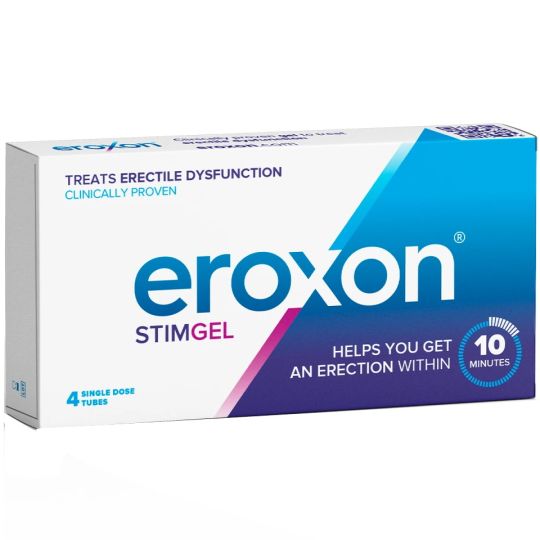
Eroxon Stimgel - 4 Pack
From £19.89
10% OFF
All Treatments
Account
Overview
Account
Overview
Treatments
Account
Viagra (sildenafil citrate) has been extensively studied since its introduction in 1998, with decades of clinical research demonstrating its effectiveness for erectile dysfunction. Understanding what Viagra does requires examining the substantial body of scientific evidence, from initial clinical trials to ongoing real-world studies. This research reveals how Viagra works at a molecular level, its effectiveness across different patient populations, and long-term safety data. Clinical studies consistently show Viagra helps approximately 70-80% of men with ED achieve erections suitable for sexual activity when sexually stimulated.
From £19.89
From £3.99

From £28.99

From £22.99

From £27.99

From £44.99

From £23.99

From £8.49
From £32.99


When PDE5 is suppressed, blood is able to flow more freely through the body—including to the (you guessed it) penis.

More blood flow to the penis means harder, more satisfying erections once you're sexually stimulated.
Clinical research demonstrates that Viagra works by inhibiting phosphodiesterase type 5 (PDE5), an enzyme responsible for breaking down cyclic guanosine monophosphate (cGMP). Studies published in leading medical journals show that when PDE5 is blocked, cGMP levels increase in penile smooth muscle, leading to vasodilation and increased blood flow. This mechanism was first identified during sildenafil's original development for cardiovascular conditions, where researchers observed its unexpected effects on erectile function.
Pharmacokinetic studies reveal Viagra reaches peak plasma concentrations within 30-120 minutes of oral administration, with food consumption potentially delaying absorption. Research indicates the medication's effects can last 4-6 hours, though this doesn't mean erections persist throughout this period - sexual stimulation remains necessary for the drug to work effectively.
The pivotal Phase III trials that led to Viagra's approval included over 4,000 men with erectile dysfunction of various causes. These randomised, double-blind, placebo-controlled studies demonstrated that 69% of men taking 50mg sildenafil and 82% taking 100mg achieved erections sufficient for intercourse, compared to just 22% taking placebo. The International Index of Erectile Function (IIEF) scores showed statistically significant improvements across all domains of sexual function.
Subsequent research has expanded our understanding of Viagra's effectiveness across different patient populations. A comprehensive meta-analysis of 27 randomised controlled trials involving 6,659 participants confirmed consistent efficacy regardless of ED severity, age, or underlying cause. Studies specifically examining men with diabetes-related ED showed response rates of 56-81%, while research in cardiovascular disease patients demonstrated 70-85% effectiveness rates.
Longitudinal studies spanning over two decades provide robust evidence for Viagra's long-term safety profile. The largest post-marketing surveillance study followed 14,298 men for up to 8 years, documenting adverse events and treatment satisfaction. Results showed that serious cardiovascular events were rare (0.39 per 100 patient-years) and generally occurred in men with pre-existing risk factors.
Research published in the Journal of Sexual Medicine tracked 979 men using Viagra for 4 years, finding that 86% continued treatment with sustained effectiveness. Importantly, studies show minimal development of tolerance - the medication maintains its effectiveness over time without requiring dose escalation in most patients. This contrasts with some other treatments where efficacy may diminish with prolonged use.
Head-to-head clinical trials comparing different PDE5 inhibitors consistently show that sildenafil (Viagra's active ingredient) performs comparably to other medications in its class. A landmark study published in the New England Journal of Medicine found no significant difference in overall effectiveness between sildenafil, tadalafil, and vardenafil, though onset times and duration of action varied.
Research also demonstrates equivalent outcomes between branded Viagra and generic sildenafil formulations. Bioequivalence studies required for generic approval show identical absorption, distribution, and elimination profiles. This evidence supports why EverydayMeds offers both branded Viagra and generic sildenafil, allowing patients to choose based on personal preference while maintaining confidence in clinical effectiveness.
Beyond controlled clinical trials, real-world evidence studies provide valuable insights into Viagra's practical effectiveness. The European Erectile Dysfunction Observational Study (EDOS) followed 2,102 men across 14 countries, revealing that 74% reported improved erections within 4 weeks of starting treatment. Patient-reported outcome measures showed significant improvements not only in erectile function but also in sexual confidence and relationship satisfaction.
Research examining treatment patterns indicates that men who achieve success with their initial Viagra prescription have high continuation rates - approximately 80% remain on treatment after 12 months. This real-world persistence data supports the clinical trial findings and suggests that the medication's benefits extend beyond physiological improvements to meaningful quality-of-life enhancements.
Comprehensive safety analyses from over 130 clinical studies establish Viagra's well-characterised adverse event profile. The most common side effects - headache, facial flushing, and dyspepsia - occur in 10-16% of patients and are generally mild to moderate in severity. Serious adverse events remain rare when the medication is used appropriately and contraindications are observed.
Cardiovascular safety research deserves particular attention given ED's association with heart disease. Large-scale studies including the Viagra Safety Study followed over 5,000 men with cardiovascular conditions, finding no increased risk of major cardiac events compared to placebo. However, research confirms the dangerous interaction with nitrate medications, reinforcing the importance of proper clinical assessment before treatment initiation.
It's one of the most common conditions we treat, and one of the most treatable.

Achieve your goals in just a few simple steps.

Select safe UK treatments. Quick answers.

Our expert team will use your consultation as the basis of our recommendation and communicate with you.

We’ll deliver direct to you, as quickly as tomorrow.