
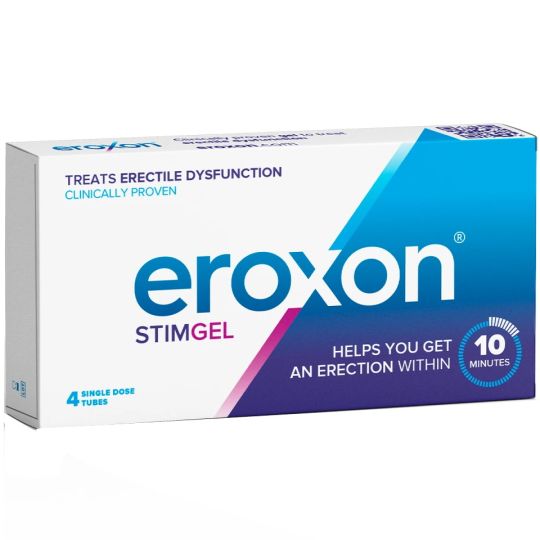
Eroxon Stimgel - 4 Pack
From £19.89
10% OFF
All Treatments
Account
Overview
Account
Overview
Treatments
Account
Viagra tablets represent one of the most extensively researched treatments for erectile dysfunction, with decades of clinical studies demonstrating their effectiveness. Understanding the scientific mechanism behind sildenafil citrate, the active ingredient in Viagra tablets, reveals how this medication works at the cellular level to support healthy erectile function. From its original development for cardiovascular conditions to becoming a cornerstone ED treatment, the science behind Viagra tablets involves complex interactions with blood vessel physiology, enzyme inhibition, and nitric oxide pathways that enable improved blood flow when sexually aroused.
From £19.89
From £3.99

From £28.99

From £22.99

From £27.99

From £44.99

From £23.99

From £8.49
From £32.99


When PDE5 is suppressed, blood is able to flow more freely through the body—including to the (you guessed it) penis.

More blood flow to the penis means harder, more satisfying erections once you're sexually stimulated.
The scientific foundation of Viagra tablets lies in their interaction with phosphodiesterase type 5 (PDE5), an enzyme predominantly found in penile blood vessels. During normal erectile function, sexual arousal triggers the release of nitric oxide in penile tissue, which activates guanylate cyclase to produce cyclic GMP (cGMP). This molecule causes smooth muscle relaxation in blood vessel walls, allowing increased blood flow. However, the PDE5 enzyme naturally breaks down cGMP, ending the erectile response. Viagra tablets contain sildenafil citrate, which selectively inhibits PDE5, preventing the breakdown of cGMP and maintaining the vasodilation necessary for sustained erections.
Clinical pharmacology studies demonstrate that sildenafil has a 10-fold selectivity for PDE5 over other phosphodiesterase enzymes, explaining its specific effectiveness for erectile dysfunction whilst minimising effects on other bodily systems. This selectivity was confirmed through extensive receptor binding studies during the medication's development phase.
The scientific journey of Viagra tablets began with research into cardiovascular conditions. Pfizer scientists originally developed sildenafil citrate as UK-92,480 for treating angina and hypertension, based on its ability to dilate blood vessels. Early clinical trials in the 1990s showed limited effectiveness for heart conditions but revealed an unexpected side effect: improved erectile function in male participants. This serendipitous discovery led researchers to investigate sildenafil's potential for treating erectile dysfunction, fundamentally shifting the research focus.
The cardiovascular research provided crucial safety data that later supported ED applications. Studies established sildenafil's effects on blood pressure, heart rate, and cardiac output, forming the foundation for understanding contraindications with nitrate medications and ensuring safe prescribing guidelines.
Extensive clinical research has established the efficacy profile of Viagra tablets across diverse patient populations. Pivotal Phase III trials involved over 3,000 men with erectile dysfunction of various causes, including diabetes, prostate surgery, spinal cord injury, and psychological factors. These studies demonstrated that approximately 70-80% of men experienced improved erectile function compared to placebo groups.
Dose-response studies identified 50mg as the optimal starting dose for most patients, with the ability to adjust to 25mg or 100mg based on individual response and tolerability. The research showed that effectiveness increases with dose, but so does the likelihood of side effects, supporting the current titration approach used in clinical practice.
Scientific analysis of sildenafil's pharmacokinetics reveals rapid absorption following oral administration, with peak plasma concentrations reached within 30-120 minutes. The medication has an elimination half-life of approximately 4 hours, explaining why effects can last 4-6 hours after dosing. Bioavailability studies show that high-fat meals can delay absorption by up to 60 minutes, though total absorption remains unchanged.
Research into drug metabolism identifies the liver enzyme CYP3A4 as primarily responsible for sildenafil breakdown, explaining important drug interactions with medications that inhibit or induce this enzyme system. This scientific understanding enables healthcare providers to adjust dosing for patients taking interacting medications or those with liver impairment.
The molecular structure of sildenafil citrate has been extensively studied using crystallography and spectroscopic techniques. The compound's similarity to cGMP allows it to bind competitively to the PDE5 enzyme's active site. Structural studies reveal that sildenafil forms hydrogen bonds and hydrophobic interactions within the enzyme pocket, effectively blocking its normal function.
Research comparing sildenafil to other PDE5 inhibitors shows distinct binding profiles that explain differences in duration of action, side effect profiles, and drug interactions. These molecular-level studies continue to inform the development of next-generation ED treatments.
Comprehensive safety research spanning clinical trials and post-marketing surveillance has established Viagra tablets' side effect profile. The most common adverse events include headache (affecting approximately 16% of users), facial flushing, and dyspepsia, typically mild and transient in nature. These effects result from PDE5 inhibition in blood vessels throughout the body, not just penile tissue.
Serious adverse events are rare but well-documented through ongoing pharmacovigilance. Priapism occurs in fewer than 1 in 1,000 users, while sudden vision or hearing loss affects even fewer patients. This safety data enables informed prescribing decisions and appropriate patient counselling.
EverydayMeds offers both branded Viagra tablets and generic sildenafil options, allowing patients to choose between products while receiving the same active ingredient and therapeutic benefits. Both formulations undergo rigorous quality testing to ensure they meet identical pharmaceutical standards, providing flexibility in treatment options while maintaining clinical effectiveness.
It's one of the most common conditions we treat, and one of the most treatable.

Achieve your goals in just a few simple steps.

Select safe UK treatments. Quick answers.

Our expert team will use your consultation as the basis of our recommendation and communicate with you.

We’ll deliver direct to you, as quickly as tomorrow.