
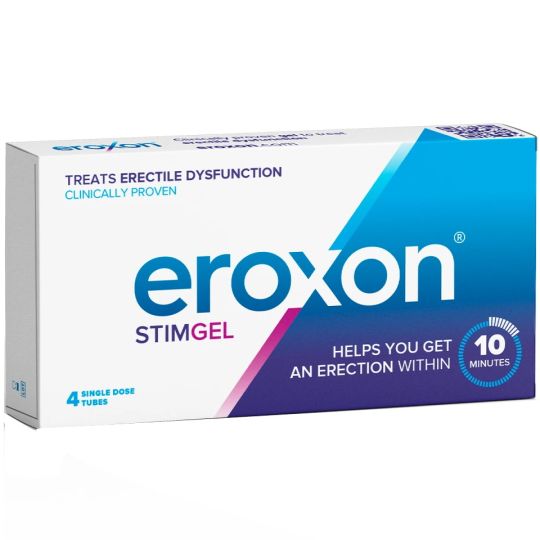
Eroxon Stimgel - 4 Pack
From £19.89
10% OFF
All Treatments
Account
Overview
Account
Overview
Treatments
Account
Viagra, the branded form of sildenafil citrate, has been extensively researched since its approval for erectile dysfunction treatment. Clinical trials demonstrate its effectiveness as a PDE5 inhibitor, with studies showing significant improvement in erectile function across diverse patient groups. Understanding the research behind this medication helps inform treatment decisions, with both branded Viagra and generic sildenafil available as treatment options.
From £19.89
From £3.99

From £28.99

From £22.99

From £27.99

From £44.99

From £23.99

From £8.49
From £32.99


When PDE5 is suppressed, blood is able to flow more freely through the body—including to the (you guessed it) penis.

More blood flow to the penis means harder, more satisfying erections once you're sexually stimulated.
The clinical development of Viagra involved comprehensive phase II and III trials across multiple patient populations. Initial studies enrolled over 3,000 men with erectile dysfunction of various aetiologies, demonstrating statistically significant improvements compared to placebo. The International Index of Erectile Function (IIEF) served as the primary efficacy measure, with patients showing marked improvements in erectile function domain scores.
Efficacy rates varied according to baseline severity, with mild ED showing 82% success rates, moderate ED achieving 76% improvement, and severe cases demonstrating 69% response rates. These outcomes were measured using patient-reported successful intercourse attempts, providing real-world clinical relevance beyond laboratory parameters.
Research established the optimal dosing regimen through dose-ranging studies comparing 25mg, 50mg, and 100mg formulations. Pharmacokinetic analysis revealed peak plasma concentrations occur 30-120 minutes post-administration, with a mean elimination half-life of 3-5 hours. Clinical data supports starting with 50mg approximately one hour before sexual activity, with dose adjustment based on efficacy and tolerability.
Food interaction studies demonstrated that high-fat meals may delay absorption by up to 60 minutes, though overall bioavailability remains unchanged. This research informs patient counselling regarding optimal timing and administration conditions for maximum therapeutic benefit.
Extensive cardiovascular safety studies addressed concerns about PDE5 inhibitor use in patients with cardiac conditions. Research demonstrated that sildenafil produces mild, transient decreases in blood pressure (8-10 mmHg systolic, 5-6 mmHg diastolic) in healthy individuals. However, contraindication data clearly establishes dangerous interactions with nitrate medications, where combined use may cause severe hypotension.
Post-marketing surveillance studies involving over 40,000 patient-years of exposure confirmed the safety profile established in clinical trials. Adverse events remain predominantly mild to moderate, including headache (16% incidence), flushing (10%), and dyspepsia (7%). Serious adverse events occur rarely and are often related to underlying cardiovascular disease rather than medication effects.
Extension studies following patients for up to four years demonstrate sustained therapeutic benefits without tolerance development. Research indicates that approximately 80% of patients continue treatment long-term, with maintained efficacy scores on standardised assessment tools. These findings support the medication's role as a reliable long-term treatment option for erectile dysfunction.
Quality of life assessments integrated into clinical trials show improvements extending beyond sexual function, including enhanced relationship satisfaction and reduced performance anxiety. Partner satisfaction scores also improved significantly compared to pre-treatment baselines, highlighting the broader therapeutic impact.
Clinical evidence supports both branded Viagra and generic sildenafil formulations, as bioequivalence studies confirm identical therapeutic profiles. Patients consulting with EverydayMeds can choose between branded or generic options during the checkout process, with clinical outcomes expected to be equivalent. This choice allows consideration of individual preferences and cost factors whilst maintaining treatment effectiveness.
It's one of the most common conditions we treat, and one of the most treatable.

Achieve your goals in just a few simple steps.

Select safe UK treatments. Quick answers.

Our expert team will use your consultation as the basis of our recommendation and communicate with you.

We’ll deliver direct to you, as quickly as tomorrow.