
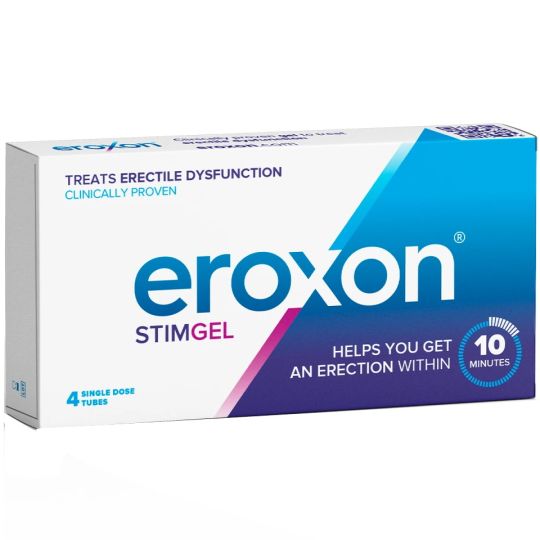
Eroxon Stimgel - 4 Pack
From £19.89
10% OFF
All Treatments
Account
Overview
Account
Overview
Treatments
Account
Extensive clinical research spanning over two decades has established Viagra (sildenafil) as the gold standard treatment for male erectile dysfunction. Since its initial approval by the MHRA, numerous peer-reviewed studies have validated its safety and efficacy in diverse male populations across the UK. This comprehensive evidence base demonstrates how Viagra works through targeted PDE5 inhibition, with clinical trials consistently showing 70-80% effectiveness rates in men with varying degrees of erectile dysfunction. Understanding this research helps men make informed decisions about their treatment options.
From £19.89
From £3.99

From £28.99

From £22.99

From £27.99

From £44.99

From £23.99

From £8.49
From £32.99


When PDE5 is suppressed, blood is able to flow more freely through the body—including to the (you guessed it) penis.

More blood flow to the penis means harder, more satisfying erections once you're sexually stimulated.
The foundation of Viagra's evidence base stems from pivotal Phase III clinical trials involving over 4,000 men with erectile dysfunction of various aetiologies. These randomised, double-blind, placebo-controlled studies consistently demonstrated significant improvements in erectile function scores compared to placebo. The International Index of Erectile Function (IIEF) questionnaire, used as the primary endpoint in most trials, showed statistically significant improvements across all domains of sexual function in men taking sildenafil 25mg, 50mg, and 100mg doses.
Notably, the research revealed dose-dependent efficacy, with 69% of men achieving successful intercourse on 50mg and 82% on 100mg, compared to just 22% on placebo. These findings established the 50mg starting dose recommendation that remains standard practice in UK clinical guidelines today. Long-term extension studies following men for up to two years confirmed sustained efficacy without tolerance development, a crucial finding for chronic erectile dysfunction management.
Given the overlap between erectile dysfunction and cardiovascular disease in male populations, extensive safety research has focused on Viagra's cardiovascular effects. The landmark studies by Kloner and colleagues demonstrated that sildenafil produces modest reductions in blood pressure (8-10 mmHg systolic) in healthy males, with greater effects in those taking antihypertensive medications. However, these changes were generally well-tolerated and did not result in clinically significant hypotension in appropriately selected patients.
Post-marketing surveillance studies tracking over 100,000 male patients have confirmed the cardiovascular safety profile established in clinical trials. The research shows that when prescribed according to established contraindications—particularly avoiding concurrent nitrate use—serious cardiovascular events occur at rates similar to the underlying ED population. This evidence supports current MHRA guidance allowing Viagra prescription to men with stable cardiovascular disease under appropriate medical supervision.
Multiple bioequivalence studies have confirmed that generic sildenafil formulations demonstrate identical pharmacokinetic profiles to branded Viagra in male subjects. These studies, required for MHRA approval of generic medications, show equivalent rates of absorption, peak plasma concentrations, and elimination half-lives between branded and generic formulations. Real-world effectiveness studies subsequently confirmed these laboratory findings translate to equivalent clinical outcomes in male patients.
Cross-over studies directly comparing patient satisfaction between branded Viagra and generic sildenafil have found no significant differences in perceived efficacy, side effect profiles, or treatment satisfaction scores. This research supports the clinical equivalence of both formulations, allowing healthcare providers and patients to choose between options based on cost considerations and personal preferences rather than efficacy concerns.
Subgroup analyses from major clinical trials have provided valuable insights into Viagra's effectiveness across different male age demographics. Research involving men aged 18-25 with psychogenic erectile dysfunction showed 85% success rates, while studies in men over 65 with organic causes demonstrated 65% effectiveness. These age-related differences reflect the multifactorial nature of erectile dysfunction rather than reduced drug efficacy in older populations.
Importantly, safety analyses across age groups revealed similar tolerability profiles, though older men showed slightly higher rates of cardiovascular and visual side effects. This research informed current prescribing guidelines recommending lower starting doses (25mg) for men over 65 or those with hepatic impairment, ensuring optimal risk-benefit ratios across all male age groups seeking treatment.
Detailed pharmacological studies have elucidated exactly how Viagra works at the molecular level in male erectile tissue. Research demonstrates that sildenafil selectively inhibits phosphodiesterase type 5 (PDE5), the enzyme responsible for breaking down cyclic guanosine monophosphate (cGMP) in penile smooth muscle. This inhibition allows cGMP accumulation during sexual arousal, promoting smooth muscle relaxation and increased blood flow essential for erection.
Importantly, this research confirmed that Viagra requires sexual stimulation to be effective—it does not cause spontaneous erections in men. The selectivity studies show sildenafil has 10-fold greater affinity for PDE5 compared to other phosphodiesterase enzymes, explaining its targeted action and relatively favourable side effect profile. This mechanistic understanding has informed optimal dosing strategies and helped predict drug interactions that clinicians monitor in practice.
It's one of the most common conditions we treat, and one of the most treatable.

Achieve your goals in just a few simple steps.

Select safe UK treatments. Quick answers.

Our expert team will use your consultation as the basis of our recommendation and communicate with you.

We’ll deliver direct to you, as quickly as tomorrow.