
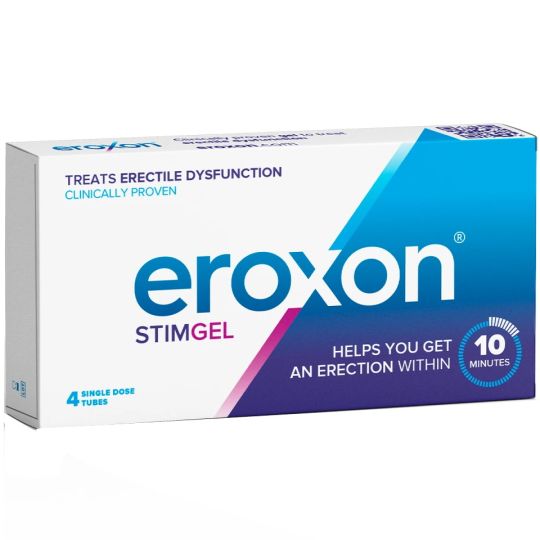
Eroxon Stimgel - 4 Pack
From £19.89
10% OFF
All Treatments
Account
Overview
Account
Overview
Treatments
Account
Understanding the clinical evidence behind erectile dysfunction treatments helps men make informed decisions about their care. Viagra (sildenafil citrate) represents one of the most extensively researched medications for ED, with over 25 years of clinical data supporting its effectiveness and safety profile. At EverydayMeds, we provide access to both branded Viagra and generic sildenafil, allowing patients to choose the option that best suits their needs following a comprehensive clinical assessment by our UK-licensed prescribers.
From £19.89
From £3.99

From £28.99

From £22.99

From £27.99

From £44.99

From £23.99

From £8.49
From £32.99


When PDE5 is suppressed, blood is able to flow more freely through the body—including to the (you guessed it) penis.

More blood flow to the penis means harder, more satisfying erections once you're sexually stimulated.
Sildenafil's journey from cardiovascular research to ED treatment represents one of modern medicine's most significant discoveries. Originally developed by Pfizer for pulmonary hypertension, researchers observed its effects on erectile function during early trials. This serendipitous finding led to extensive clinical research programmes that established sildenafil as the first oral PDE5 inhibitor for erectile dysfunction treatment.
Landmark studies involving over 4,000 men demonstrated that sildenafil significantly improved erectile function compared to placebo. The International Index of Erectile Function (IIEF) scores showed improvement in 70-85% of participants across various dosages. Men reported enhanced ability to achieve and maintain erections sufficient for satisfactory sexual intercourse. These results remained consistent across different age groups, from men in their 30s to those over 70 years old.
Clinical research confirms that sildenafil works by inhibiting phosphodiesterase type 5 (PDE5), an enzyme responsible for breaking down cyclic guanosine monophosphate (cGMP). During sexual arousal, nitric oxide release leads to cGMP production, which relaxes smooth muscle in penile blood vessels. By blocking PDE5, sildenafil allows cGMP levels to remain elevated, promoting increased blood flow to the penis when sexually stimulated.
Decades of post-marketing surveillance have confirmed sildenafil's established safety profile when used appropriately. Common side effects, experienced by less than 10% of users, include headaches, facial flushing, indigestion, and nasal congestion. These effects are typically mild to moderate and resolve naturally as the medication clears from the system. Serious adverse events remain rare when contraindications are respected and drug interactions avoided.
Research demonstrates that generic sildenafil contains identical active ingredients to branded Viagra, with bioequivalence studies confirming equivalent absorption, distribution, and elimination profiles. Both formulations must meet identical regulatory standards set by the MHRA. The choice between branded Viagra and generic sildenafil often comes down to personal preference and cost considerations, as clinical effectiveness remains equivalent.
Studies following men using sildenafil in routine clinical practice confirm that trial results translate effectively to real-world settings. Patient satisfaction surveys indicate high levels of treatment satisfaction, with many men reporting improved confidence and relationship quality. Treatment continuation rates remain high, suggesting sustained benefit over time when medication is used as part of comprehensive ED management.
It's one of the most common conditions we treat, and one of the most treatable.

Achieve your goals in just a few simple steps.

Select safe UK treatments. Quick answers.

Our expert team will use your consultation as the basis of our recommendation and communicate with you.

We’ll deliver direct to you, as quickly as tomorrow.