
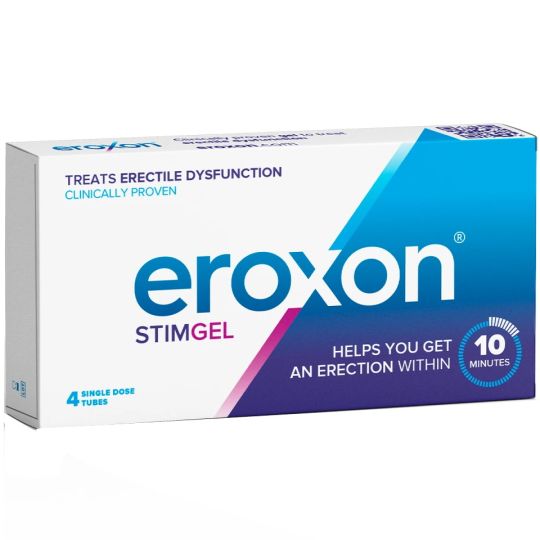
Eroxon Stimgel - 4 Pack
From £19.89
10% OFF
All Treatments
Account
Overview
Account
Overview
Treatments
Account
Viagra for men represents one of the most extensively researched treatments for erectile dysfunction, backed by decades of clinical studies and scientific evidence. Understanding the science behind how Viagra works helps men make informed decisions about their ED treatment. From its original discovery as a cardiovascular medication to becoming the world's most prescribed ED treatment, Viagra's mechanism of action is rooted in solid pharmacological principles. This comprehensive guide explores the clinical research, biochemical processes, and scientific evidence that demonstrates how Viagra effectively treats erectile dysfunction in men across different age groups and health conditions.
From £19.89
From £3.99

From £28.99

From £22.99

From £27.99

From £44.99

From £23.99

From £8.49
From £32.99


When PDE5 is suppressed, blood is able to flow more freely through the body—including to the (you guessed it) penis.

More blood flow to the penis means harder, more satisfying erections once you're sexually stimulated.
The science behind Viagra for men begins with an unexpected discovery during cardiovascular research in the 1990s. Originally developed by Pfizer as UK-92,480, sildenafil was initially investigated for treating angina and pulmonary hypertension. Clinical trials revealed that whilst the compound showed modest effects on heart conditions, male participants consistently reported improved erections. This serendipitous finding led researchers to pivot their focus, ultimately leading to the first oral treatment for erectile dysfunction approved by regulatory authorities worldwide.
The scientific breakthrough came from understanding sildenafil's specific mechanism: selective inhibition of phosphodiesterase type 5 (PDE5). This enzyme plays a crucial role in regulating blood flow within penile tissue, making it an ideal therapeutic target for treating erectile dysfunction.
The science behind Viagra's effectiveness lies in its precise interaction with the PDE5 enzyme. During sexual arousal, nitric oxide (NO) is released in penile tissue, activating an enzyme called guanylyl cyclase. This produces cyclic guanosine monophosphate (cGMP), a chemical messenger that relaxes smooth muscle cells in penile blood vessels, allowing increased blood flow and erection formation.
Under normal circumstances, PDE5 breaks down cGMP, ending the erection. However, sildenafil selectively binds to PDE5, preventing cGMP breakdown and maintaining the biochemical conditions necessary for sustained erections. Clinical pharmacology studies demonstrate that sildenafil is approximately 10,000 times more selective for PDE5 compared to other phosphodiesterase enzymes, explaining its specific effectiveness for erectile dysfunction without significantly affecting other bodily functions.
Extensive clinical research has established Viagra's effectiveness through multiple randomised, double-blind, placebo-controlled trials involving thousands of participants. Landmark studies published in major medical journals demonstrate that sildenafil significantly improves erectile function across diverse populations, including men with diabetes, cardiovascular disease, and age-related ED.
The International Index of Erectile Function (IIEF) scores consistently show statistically significant improvements in men taking Viagra compared to placebo groups. Clinical data reveals that approximately 70-80% of men experience improved erections sufficient for sexual intercourse, with effectiveness rates varying based on underlying health conditions, age, and psychological factors.
Scientific studies examining sildenafil's absorption, distribution, metabolism, and elimination have established evidence-based dosing protocols. Research shows that sildenafil reaches peak plasma concentrations approximately 60 minutes after oral administration, with bioavailability of around 40%. The compound undergoes hepatic metabolism primarily through CYP3A4 pathways, with an elimination half-life of approximately 4 hours in healthy individuals.
Clinical pharmacology research has identified that food intake, particularly high-fat meals, can delay absorption by up to 60 minutes without affecting overall effectiveness. These findings have informed prescribing guidelines that recommend taking Viagra 30-60 minutes before sexual activity, preferably on an empty stomach for optimal results.
Given PDE5's presence in cardiovascular tissue, extensive research has examined Viagra's effects on heart function and blood pressure. Clinical studies demonstrate that sildenafil causes mild, transient reductions in systolic and diastolic blood pressure (typically 8-10 mmHg), which are generally well-tolerated in healthy individuals.
However, research has identified potentially dangerous interactions with nitrate medications, which can cause severe hypotension. This scientific evidence has established absolute contraindications for concurrent use of Viagra with any nitrate-containing medications, including glyceryl trinitrate sprays and recreational substances containing amyl nitrite.
Bioequivalence studies comparing branded Viagra with generic sildenafil formulations demonstrate identical pharmacokinetic profiles and clinical effectiveness. Regulatory authorities require generic medications to show bioequivalence within 90% confidence intervals, ensuring patients receive equivalent therapeutic benefits regardless of whether they choose branded or generic options.
EverydayMeds offers both Viagra (branded) and sildenafil (generic) options, allowing patients to choose based on personal preference whilst receiving the same scientifically-proven active ingredient. This flexibility ensures access to evidence-based ED treatment regardless of budget considerations.
Clinical studies examining Viagra's effectiveness across different age groups provide valuable insights into treatment expectations. Research demonstrates that whilst sildenafil remains effective in older men, those over 65 may require dose adjustments due to age-related changes in metabolism and increased likelihood of comorbid conditions.
Studies show that men in their 40s and 50s typically experience higher response rates compared to those over 70, largely due to the multifactorial nature of age-related erectile dysfunction. However, even in men over 75, clinical trials demonstrate significant improvements in erectile function when appropriate dosing and medical supervision are maintained.
It's one of the most common conditions we treat, and one of the most treatable.

Achieve your goals in just a few simple steps.

Select safe UK treatments. Quick answers.

Our expert team will use your consultation as the basis of our recommendation and communicate with you.

We’ll deliver direct to you, as quickly as tomorrow.