
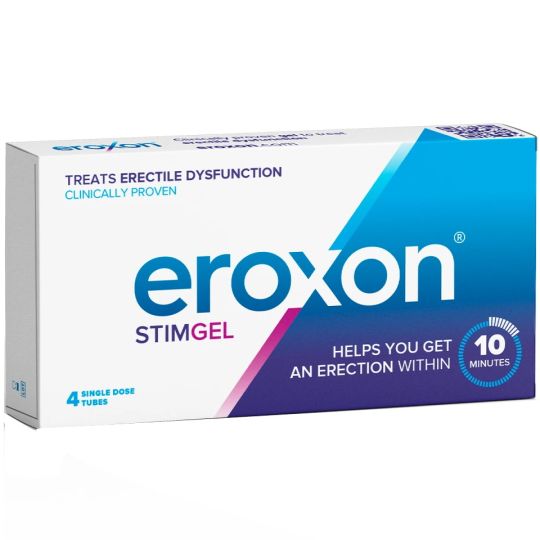
Eroxon Stimgel - 4 Pack
From £19.89
10% OFF
All Treatments
Account
Overview
Account
Overview
Treatments
Account
Viagra (sildenafil citrate) has been extensively studied since its introduction in 1998, with over two decades of clinical research supporting its efficacy for erectile dysfunction. The active ingredient sildenafil has demonstrated consistent results across multiple clinical trials involving thousands of participants. At EverydayMeds, we provide access to both branded Viagra and generic sildenafil options, allowing patients to choose based on preference and budget whilst receiving the same clinically-proven active ingredient.
From £19.89
From £3.99

From £28.99

From £22.99

From £27.99

From £44.99

From £23.99

From £8.49
From £32.99


When PDE5 is suppressed, blood is able to flow more freely through the body—including to the (you guessed it) penis.

More blood flow to the penis means harder, more satisfying erections once you're sexually stimulated.
Sildenafil's development as an erectile dysfunction treatment stems from rigorous clinical testing involving over 4,000 men across multiple international studies. The pivotal phase III trials demonstrated that sildenafil significantly improved erectile function compared to placebo, with response rates ranging from 60-85% depending on the underlying cause of erectile dysfunction. These studies established the foundation for regulatory approval by the MHRA and worldwide health authorities.
Clinical research has established that sildenafil works as a selective phosphodiesterase type 5 (PDE5) inhibitor. Studies using penile plethysmography and Doppler ultrasound have shown that sildenafil enhances the natural erectile response by increasing cyclic guanosine monophosphate (cGMP) levels in penile tissue. This mechanism requires sexual arousal to be effective, as demonstrated in controlled laboratory studies measuring physiological responses.
Research has identified optimal dosing strategies for sildenafil treatment. Clinical trials comparing 25mg, 50mg, and 100mg doses found that 50mg represents the ideal starting dose for most patients, providing effective results whilst minimising side effects. Dose-response studies indicate that approximately 80% of men respond adequately to either 50mg or 100mg, with the option to reduce to 25mg for those experiencing side effects.
Long-term safety studies spanning over 15 years have confirmed sildenafil's acceptable risk profile when prescribed appropriately. The most common adverse events reported in clinical trials include headache (11-16%), facial flushing (10-13%), and indigestion (7-12%). Serious adverse events remain rare, occurring in less than 2% of study participants, and are typically related to underlying cardiovascular conditions or contraindicated drug interactions.
Independent studies have confirmed that generic sildenafil demonstrates bioequivalence to branded Viagra, with identical pharmacokinetic profiles and therapeutic outcomes. Research published in the British Journal of Clinical Pharmacology shows no clinically significant differences in efficacy, onset of action, or side effect profiles between branded and generic formulations. This evidence supports patient choice between Viagra and sildenafil based on personal preference rather than clinical considerations.
Post-marketing surveillance studies involving millions of prescriptions have validated clinical trial findings in real-world settings. NHS prescription data analysis shows high continuation rates, with approximately 70% of patients maintaining treatment beyond 12 months. Patient-reported outcome measures consistently demonstrate improved quality of life scores and relationship satisfaction among men using sildenafil-based treatments. EverydayMeds provides both options through our regulated online service, ensuring patients receive clinically-proven treatment with convenient access and professional oversight.
It's one of the most common conditions we treat, and one of the most treatable.

Achieve your goals in just a few simple steps.

Select safe UK treatments. Quick answers.

Our expert team will use your consultation as the basis of our recommendation and communicate with you.

We’ll deliver direct to you, as quickly as tomorrow.