
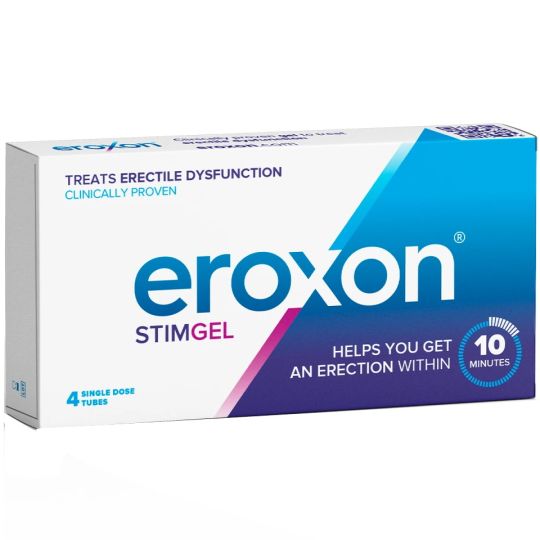
Eroxon Stimgel - 4 Pack
From £19.89
10% OFF
All Treatments
Account
Overview
Account
Overview
Treatments
Account
Sildenafil 50mg represents decades of clinical research into phosphodiesterase type 5 (PDE5) inhibition for erectile dysfunction treatment. Originally developed for cardiovascular research, extensive clinical trials revealed sildenafil's effectiveness in improving erectile function through enhanced blood flow mechanisms. Understanding the scientific foundation helps patients make informed decisions about ED treatment options, whether choosing generic sildenafil or branded Viagra.
From £19.89
From £3.99

From £28.99

From £22.99

From £27.99

From £44.99

From £23.99

From £8.49
From £32.99


When PDE5 is suppressed, blood is able to flow more freely through the body—including to the (you guessed it) penis.

More blood flow to the penis means harder, more satisfying erections once you're sexually stimulated.
Sildenafil's journey from cardiovascular research to ED treatment exemplifies scientific innovation. Initially investigated for pulmonary arterial hypertension, researchers observed unexpected improvements in erectile function during clinical trials. This serendipitous discovery led to extensive research programmes examining sildenafil's mechanism of action and therapeutic potential for erectile dysfunction.
Sildenafil works by inhibiting phosphodiesterase type 5 (PDE5), an enzyme that breaks down cyclic guanosine monophosphate (cGMP). When sexual arousal occurs, nitric oxide release triggers cGMP production, causing smooth muscle relaxation in penile blood vessels. PDE5 naturally degrades cGMP, ending the erectile response. Sildenafil blocks this degradation, maintaining increased blood flow and supporting erectile function.
Research demonstrates that sildenafil is highly selective for PDE5, though it shows some affinity for PDE6 (found in retinal tissue) and PDE1. This selectivity profile explains both the medication's effectiveness and its side effect profile, including occasional visual disturbances reported in clinical studies.
Extensive clinical research established 50mg as the recommended starting dose for most patients. Pivotal studies involving thousands of men with erectile dysfunction of various aetiologies demonstrated significant improvement in erectile function questionnaire scores compared to placebo. Success rates typically ranged from 60-80% depending on underlying causes and patient characteristics.
Dose-response studies revealed that whilst 25mg showed efficacy in some patients, 50mg provided optimal balance between effectiveness and tolerability for the majority. The 100mg dose increased efficacy marginally but with higher incidence of adverse effects, supporting 50mg as the preferred initial dose.
Research into sildenafil's pharmacokinetic properties reveals peak plasma concentrations occur approximately 60 minutes after oral administration. However, clinical effects may be apparent within 30 minutes for many patients. The medication's half-life of approximately 4 hours means effects can persist for 4-6 hours, though this doesn't indicate continuous erection duration.
Food interaction studies demonstrate that high-fat meals can delay absorption and reduce peak concentrations, potentially affecting onset time. This research supports recommendations to take sildenafil on an empty stomach or with light meals for optimal effectiveness.
Comprehensive cardiovascular safety studies were crucial given sildenafil's vasodilatory effects. Research confirms that sildenafil is generally well-tolerated in men with stable cardiovascular disease, though careful assessment remains essential. The medication causes modest reductions in blood pressure, typically 8-10 mmHg systolic and 5-6 mmHg diastolic.
Critical research identified dangerous interactions with nitrate medications, where combined use can cause severe hypotension. This finding established absolute contraindications for concurrent nitrate use and emphasises the importance of thorough medical assessment before prescribing.
Bioequivalence studies demonstrate that generic sildenafil contains identical active ingredients to branded Viagra, with equivalent absorption and clinical effects. Patients can choose between generic sildenafil and branded Viagra based on personal preference, with both options available through EverydayMeds following appropriate clinical assessment by UK-licensed prescribers.
It's one of the most common conditions we treat, and one of the most treatable.

Achieve your goals in just a few simple steps.

Select safe UK treatments. Quick answers.

Our expert team will use your consultation as the basis of our recommendation and communicate with you.

We’ll deliver direct to you, as quickly as tomorrow.